
This post contains affiliate links; if you buy through one, we may earn a small commission at no extra cost to you.
Last Updated on September 23, 2026 by John Norton
The short answer on how to stop a recliner from rocking is that you match the fix to the cause, and there are only three causes worth checking. A rocker that was built to move needs its mechanism tightened, blocked, or locked, while a chair that was never meant to rock is almost always loose at the base bolts or standing on a slick floor.
I spent over ten years selling, assembling, and repairing recliners, and the rocking complaint came up almost every week. The callers were usually parents whose toddlers treated the chair as a climbing frame, or older customers who wanted the seat to stay still while they stood up.
This guide asks the diagnosis question first, then gives the fixes in the order I still use them.
Table of Contents
How do you stop a recliner from rocking?
You stop a recliner from rocking by tightening the rocker mechanism and base bolts, adding friction with a stop block or gripper pads, using the lock if your chair has one, or converting the base to a fixed frame when nothing else holds. Work down that list instead of jumping to the permanent fix.
The order matters most when your chair still reclines perfectly and only the sway is the problem. Here is the sequence I follow.
- Tighten the bolts on the rocker mechanism and the base.
- Add a stop block or wedge if the rocker still travels too far.
- Use the built-in lock, if your model carries one.
- Fit gripper pads when the whole chair shifts across the floor.
- Convert to a fixed base only when the rocker itself is worn out.
Which kind of rocking are you dealing with?
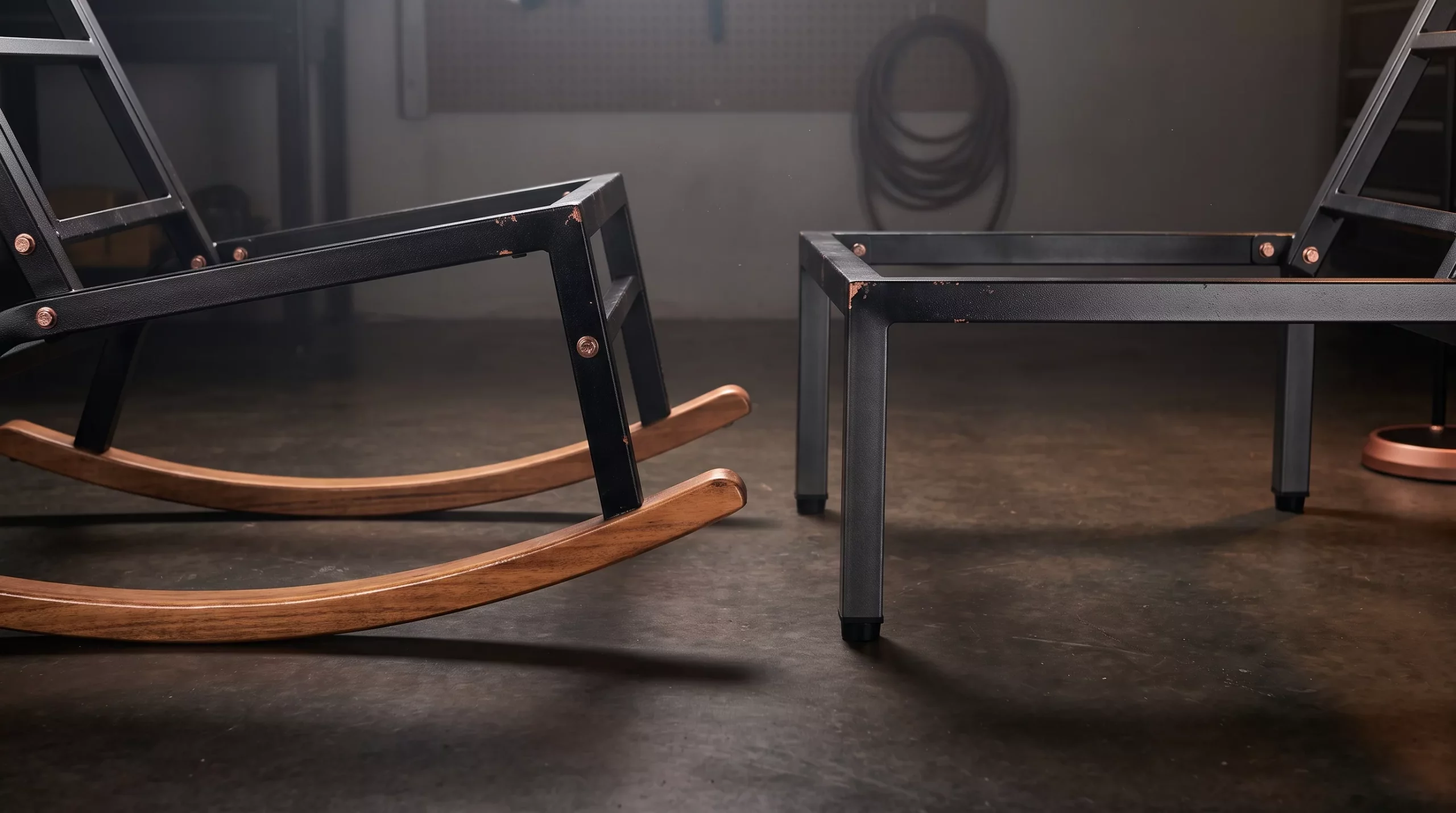
The fix depends on which of three chairs you own. One rocks by design, one rocks because its mechanism is loose, and one wobbles even though it was never built to rock.
| What you notice | What it means | First fix to try |
|---|---|---|
| The chair rocks smoothly but will not hold still | A rocker working as designed, with too much free travel | Stop block or wedge under the rail |
| A clunk or a wobble at the base as you sit down | Loose bolts or stretched rocker springs | Tighten the frame and replace the springs |
| A fixed recliner shifts and tilts on the floor | Loose base bolts, worn glides, or a slick floor | Gripper pads and a base bolt check |
Most people who call a rocker faulty own a chair doing what it was built to do. The rocker sits on two steel rails that roll on the base, so when the stops that limit that travel wear down, the movement feels endless.
How do you tighten a recliner mechanism?
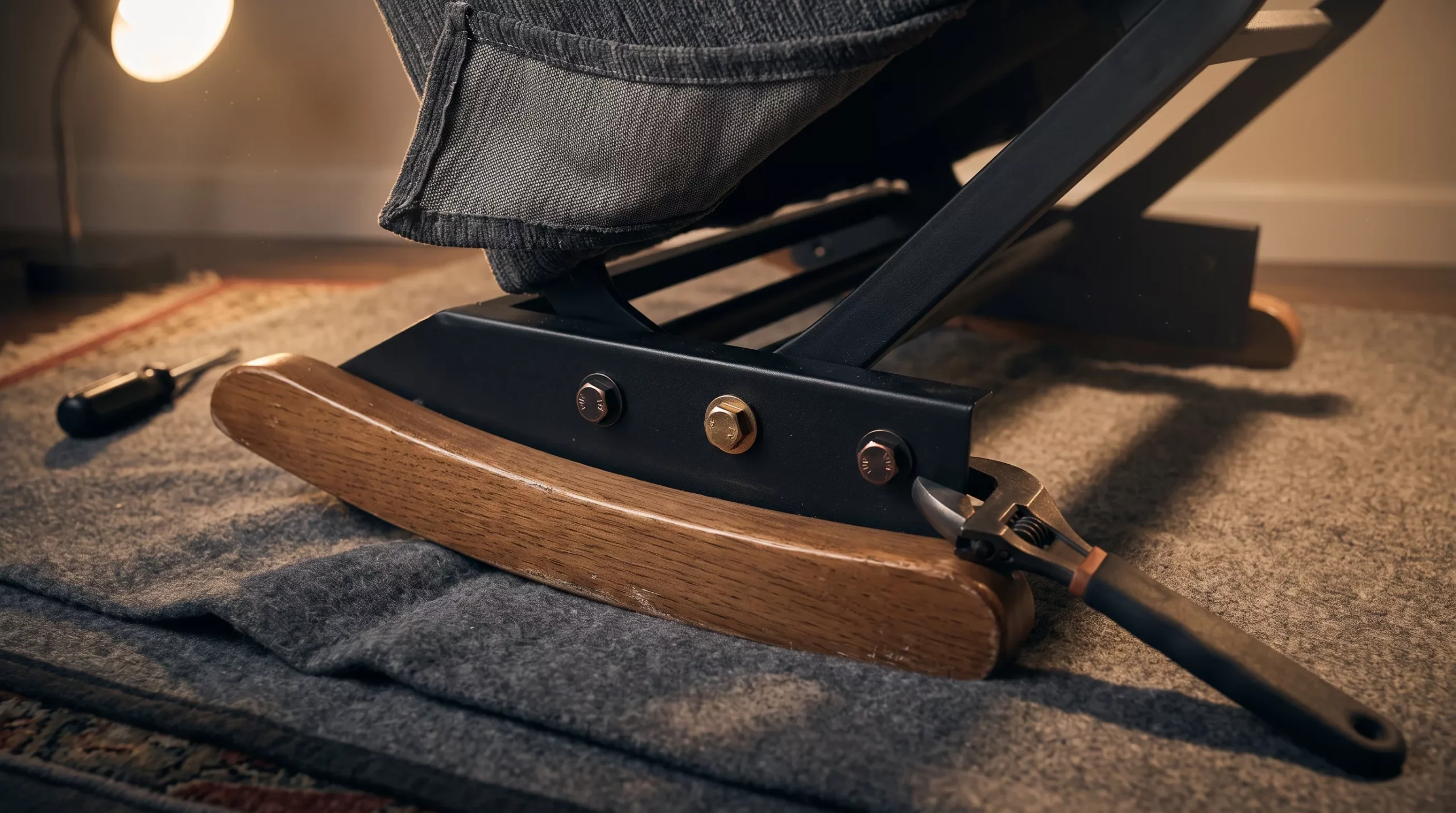
You tighten a recliner mechanism by laying the chair on its side, reaching the bolts that join the rocker rails to the base, and snugging each one with a socket or an adjustable wrench.
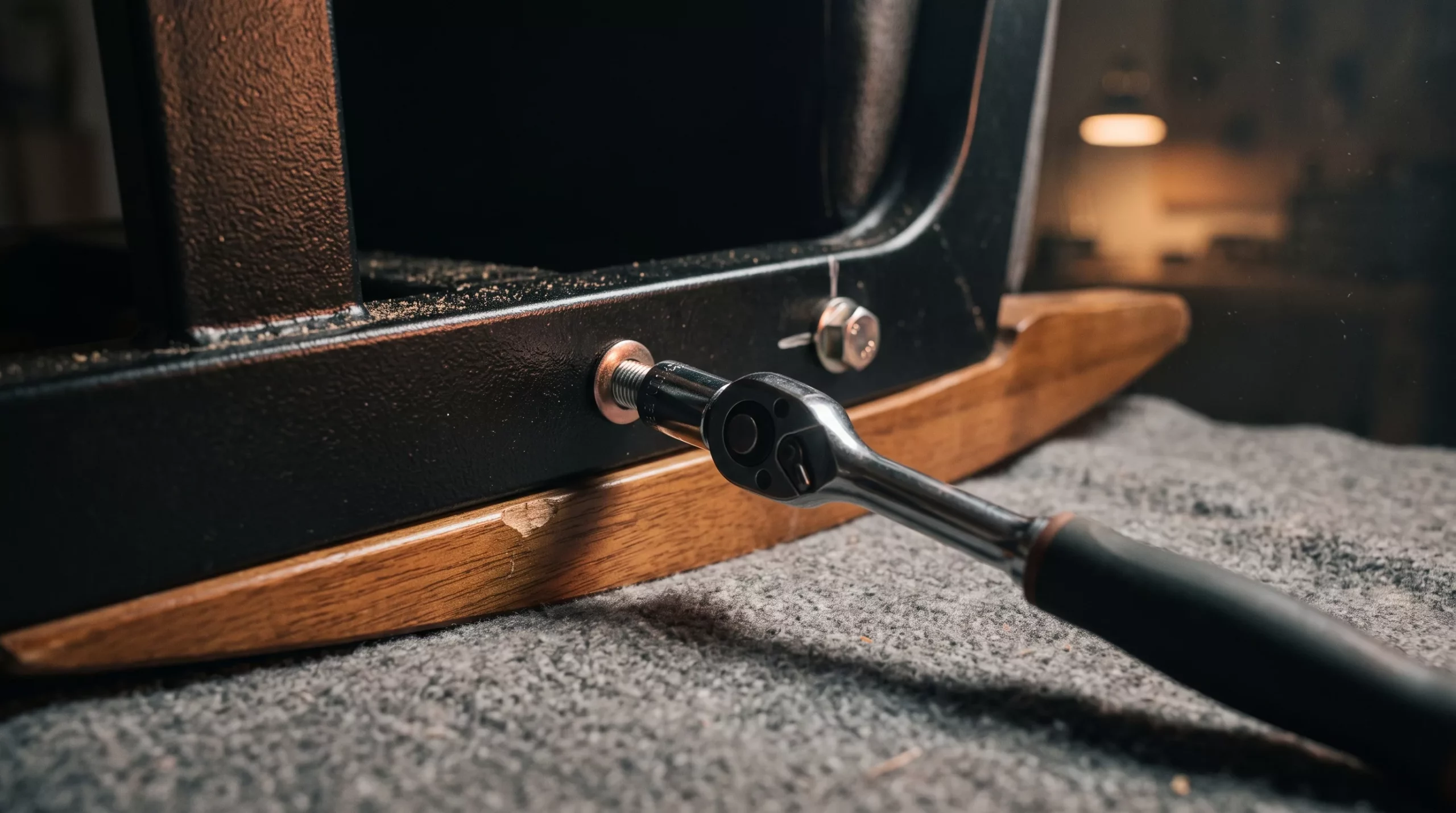
Lay a blanket down, tip the chair onto its side, and lock the footrest closed so the linkage stays clear. Work around the base and snug every bolt you can reach, because one loose bolt lets the frame twist as you sit.
On an older chair, check the rocker springs while you are underneath. A stretched or broken pair is why a rocker feels bottomless, and a replacement rocker recliner spring set is inexpensive. On the floor models I assembled, the springs were always the first parts to stretch, and my guide to fixing a recliner mechanism covers the springs and cables in more depth.
How do you block or lock a rocker so it stays still?
You stop a rocker from moving by fitting a wedge or stop block under the rocker rail, or by using the lock lever that many modern chairs hide near the base.
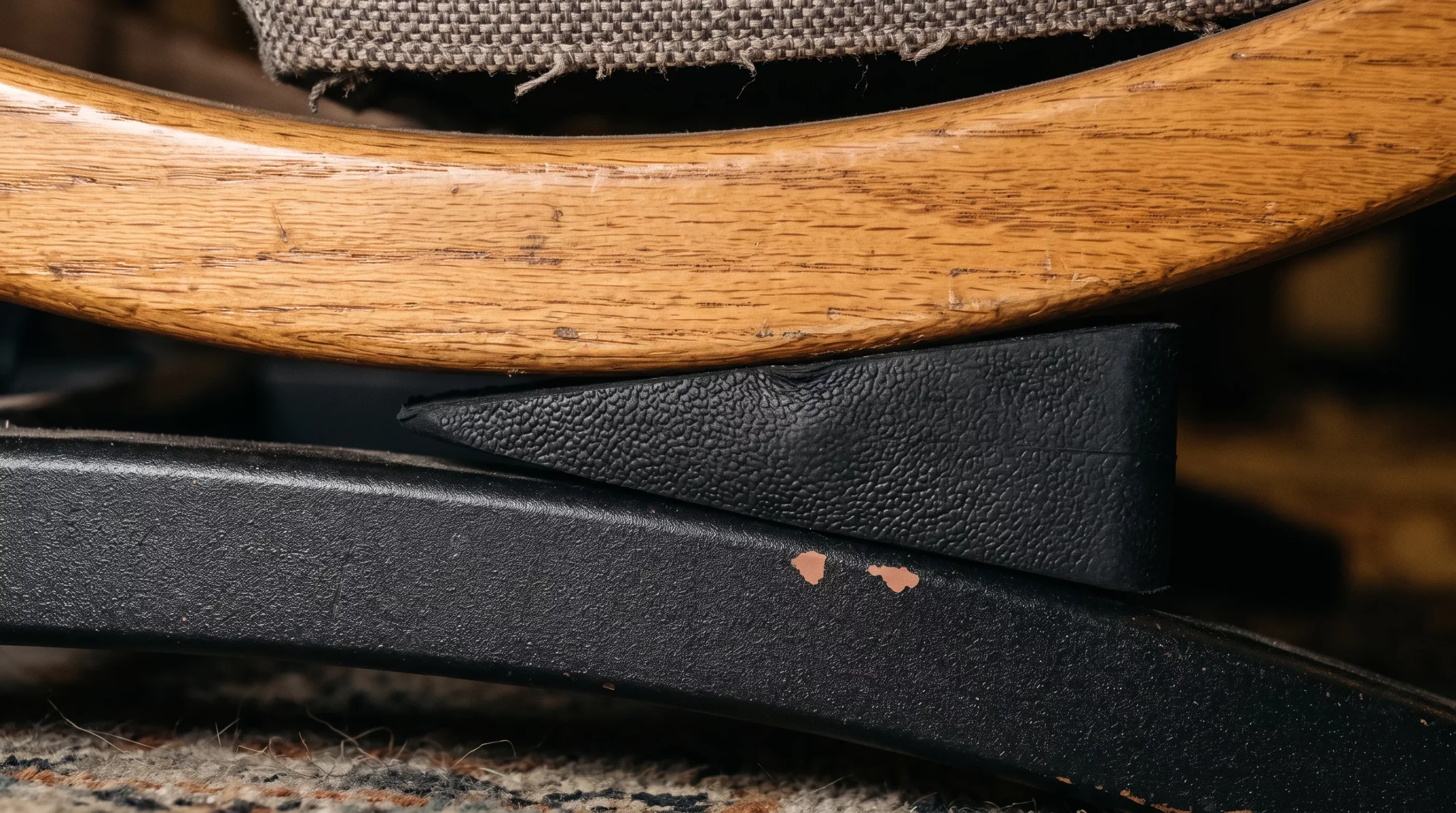
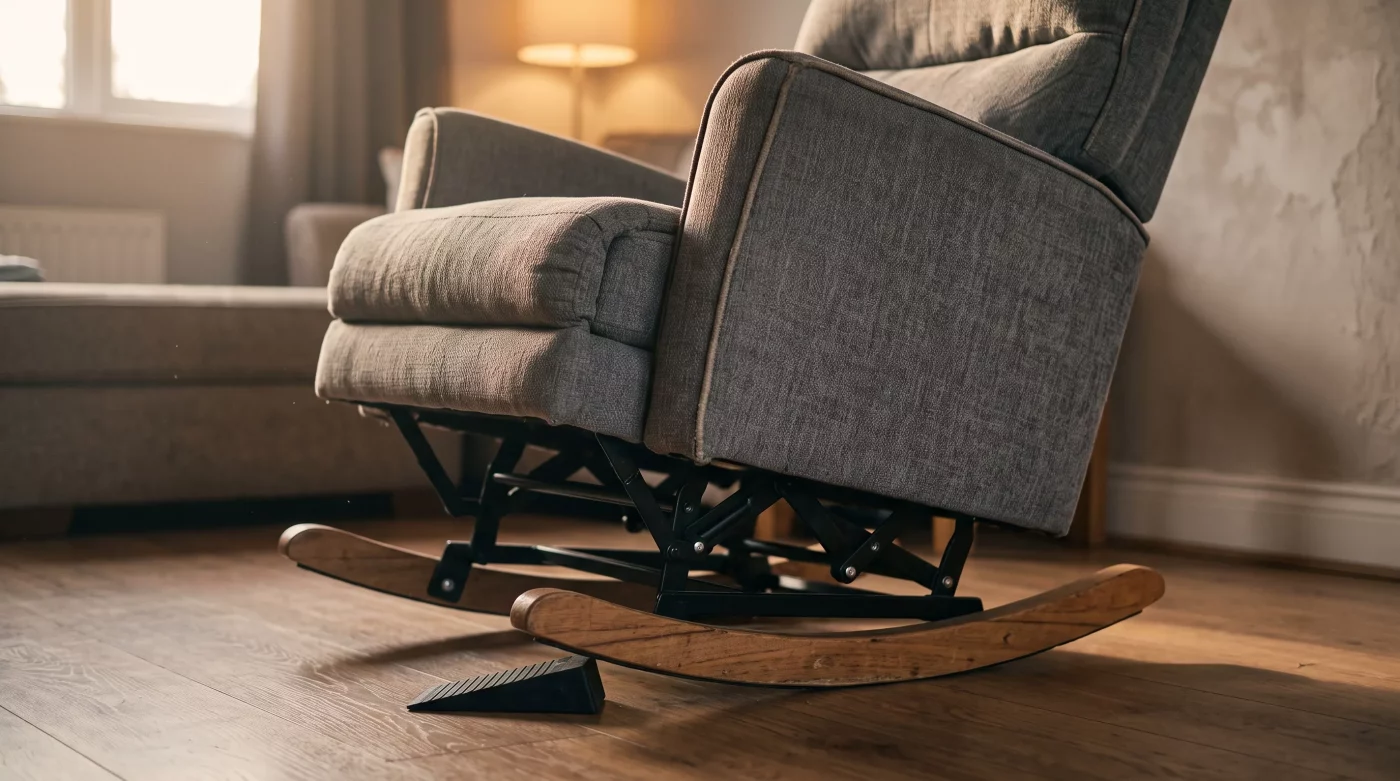
Tip the chair onto its side and find the two curved rails on the base. Slide a hard rubber wedge or a block of wood under each rail, in the gap between the rail and the base, and check that it catches both ends of the travel.
If your chair has a rocking lock, you will usually find it as a lever, a knob, or a tab on the side of the base. Pull or turn it, then test the chair before you set it down. The permanent option is a stationary base that replaces the rocker rails with fixed legs, which is the right call once the rocker is worn out.
Why does a fixed recliner still rock or wobble?
A fixed recliner rocks because the base bolts have worked loose, the floor glides are worn, or the floor is uneven. The cure is friction plus a hardware check, not a block.
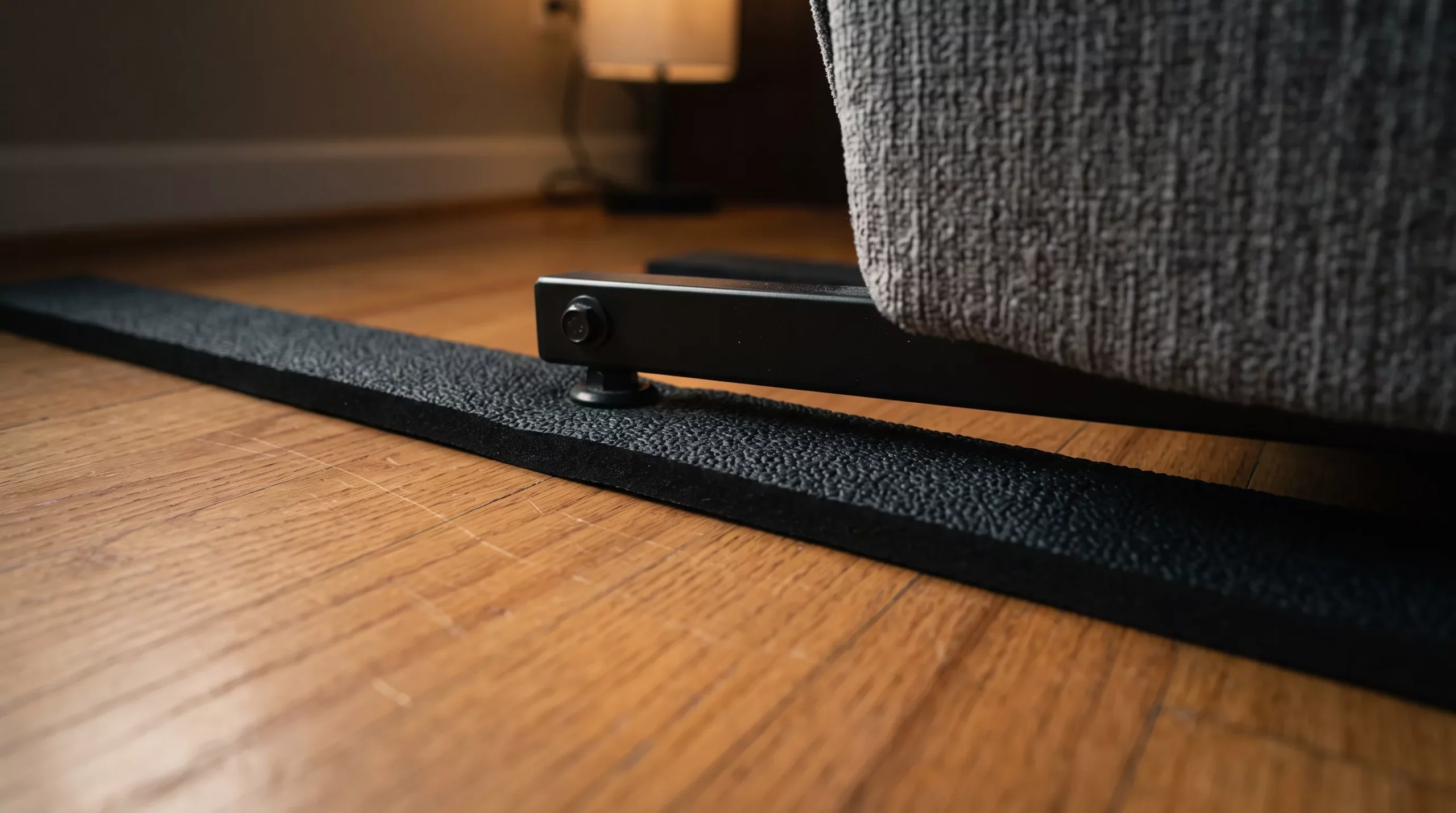
Tighten the bolts that hold the base together, since a chair on a hard floor loosens them over the years. Then check the small glides under each leg, because a missing glide leaves one corner shorter and the chair tips as you settle in.
On a hardwood floor the whole chair can also skate, which reads as rocking even when the frame is tight. A set of recliner floor gripper pads under the rails adds enough grip to hold a heavy chair in place, and it protects the floor. I fitted these constantly in the store, and my guide to keeping a recliner from sliding on hardwood floors covers the floor side in more detail.
How do you keep a recliner from rocking again?
You keep a recliner from rocking by rechecking the base bolts every few months, keeping the mechanism clean, and fixing a squeak before it turns into a wobble.
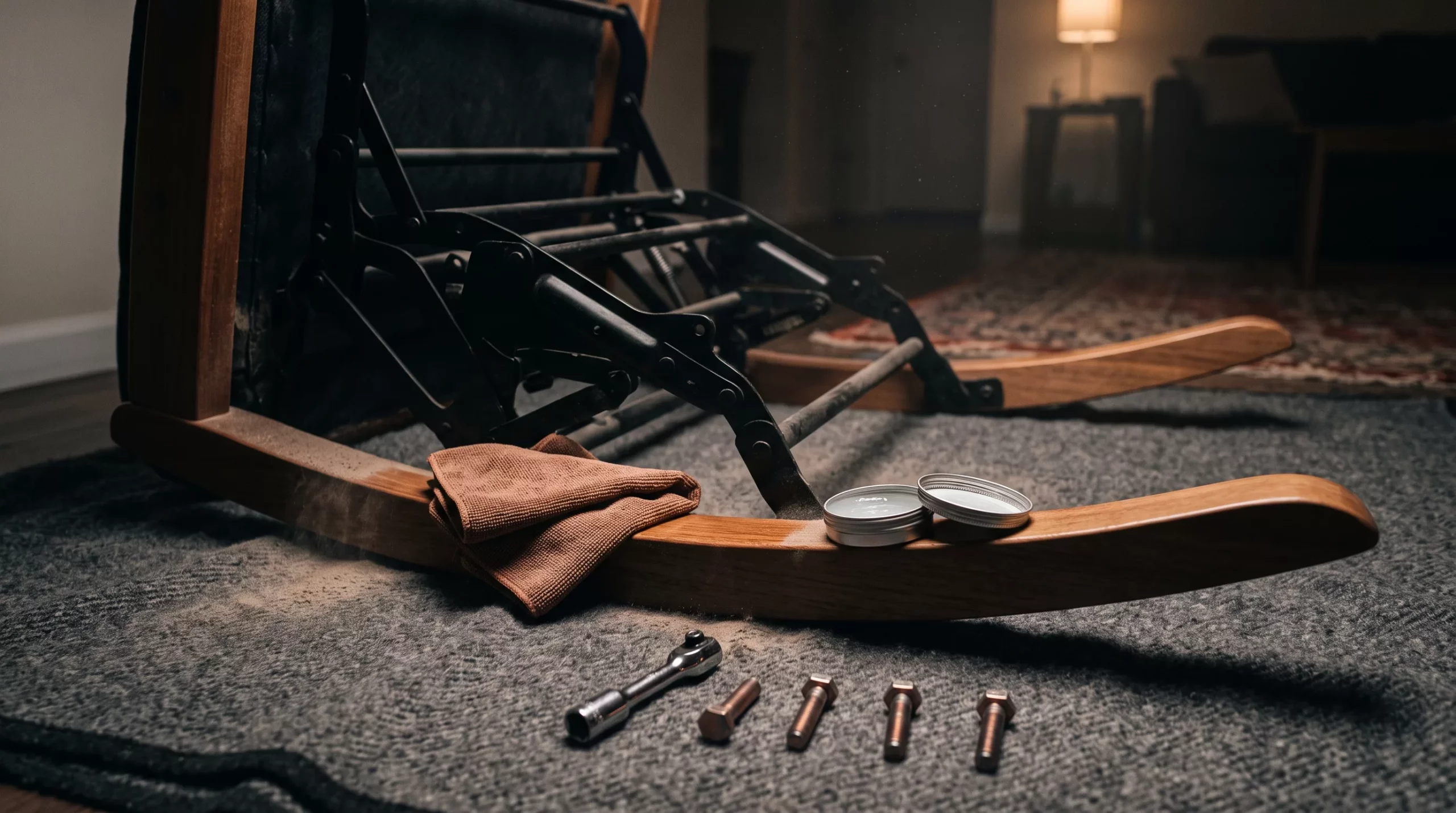
Spend five minutes under the chair every season. Snug the bolts, wipe dust off the rocker rails, and check that nothing has cracked at the corners of the base. If the frame makes noise as it moves, that is the early sign of a dry joint, and my guide to fixing a squeaking recliner explains why silicone beats an oil can on these parts.
Kids jumping onto the footrest also punish the mechanism, and my guide to fixing a recliner that will not recline covers the parts that fail first. Diagnose the chair, tighten the hardware, then add a block or a pad, and you will spend far less than the price of a replacement.
Frequently asked questions
Do all rocker recliners have a locking mechanism?
No, it depends on the brand and the model year. Many higher end recliners include a lock lever or a swivel lock, while budget rockers often have none. If yours has no lock, a stop block under the rail is the simplest substitute.
Will a stop block damage the rocker mechanism?
A firm rubber or wooden block will not damage a healthy mechanism, because it only limits travel the rocker stops were meant to limit anyway. Avoid soft foam that compresses into the moving parts.
Can I stop a La-Z-Boy recliner from rocking?
Yes, and most La-Z-Boy rockers respond to the same fixes as any other brand. Tighten the base bolts first, then use the lock if the model has one, and fit a block under the rail if it does not.
Is it cheaper to fix a rocker or replace the chair?
A fix is almost always cheaper, since a spring set, a block, or a pair of gripper pads costs a fraction of a new recliner. Replacement only makes sense when the frame is cracked or the mechanism is worn beyond repair.
