
This post contains affiliate links; if you buy through one, we may earn a small commission at no extra cost to you.
Last Updated on September 4, 2026 by John Norton
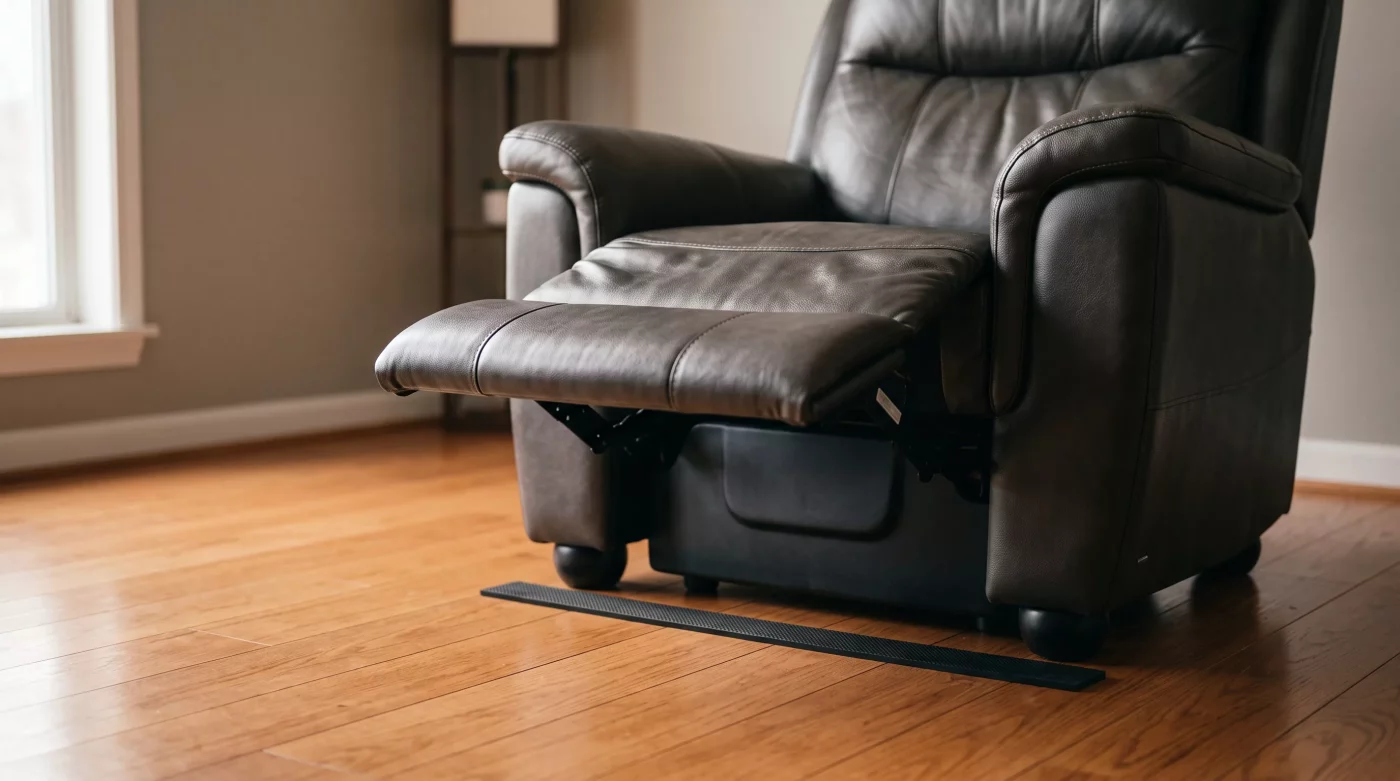
The short version of how to keep a recliner from sliding on hardwood floors is to put gripper rails under the front edge of the base and a non-slip mat under the back, because the chair moves when you push off to stand up or when the footrest kicks out. In my years selling and repairing recliners I saw this on almost every smooth floor, and the fix is almost never a heavier chair or tighter springs. It is friction between the base and the floor, so the solution is always something that grips the wood without scratching it.
Hardwood is the worst floor for a recliner, because it is smooth and the recline motion pushes the whole chair backward every time you lean into it. On carpet the legs dig in a little, but on wood they just travel. This guide covers the reasons it happens, the products I actually recommend, and the order I would try them, so you do not buy three things when one would do.
Table of Contents
Why does my recliner slide on hardwood floors?
A recliner slides on hardwood because the recline and rise motion pushes the base forward and back on a surface with almost no friction, and most recliner bases sit on smooth metal or plastic feet that grip nothing. The nylon glides manufacturers use are chosen so they do not scratch the wood, but that smoothness is exactly what lets the chair travel.
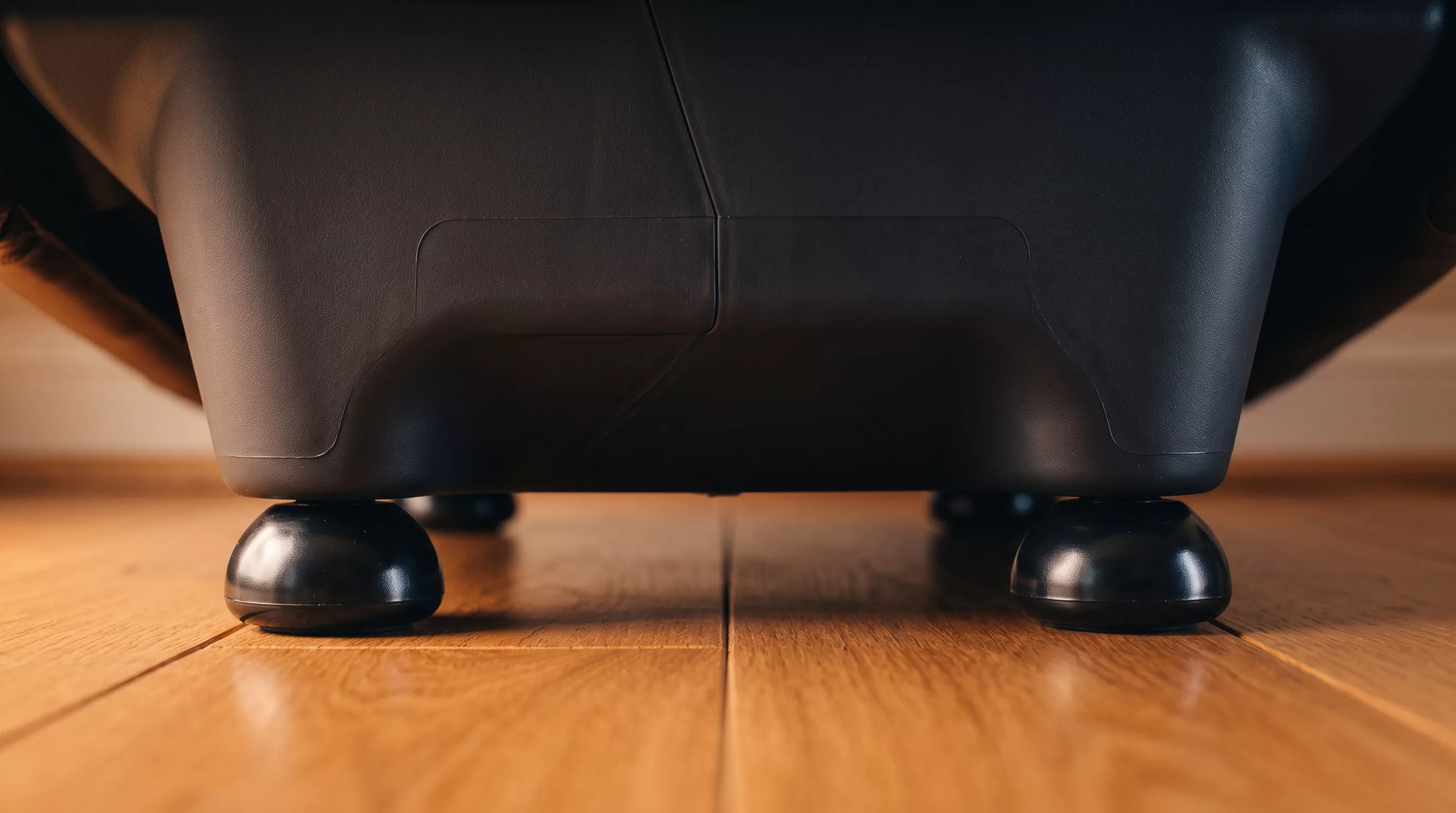
A recliner moves more than a sofa for one simple reason: the mechanism. When you lean back, the seat pushes your weight forward against the footrest, and the chair reacts by driving its front edge into the floor. When you close it, the motion reverses and the chair kicks back. Do that a few times a night and a chair that started a foot from the wall is nudging the baseboard by morning. In the store we watched for exactly this, because a sliding chair also scuffs the finish and makes customers think the piece is broken when it is not.
What is the best way to stop a recliner from sliding?
The best fix is a pair of recliner gripper rails under the front edge of the base, because they stop the movement right where the chair actually pushes and they hold without glue or sticky pads that can mark the wood. These are strips of grippy closed-cell material that sit on the floor under the front of the base, and the weight of the chair presses them into the wood so the surface locks in place.
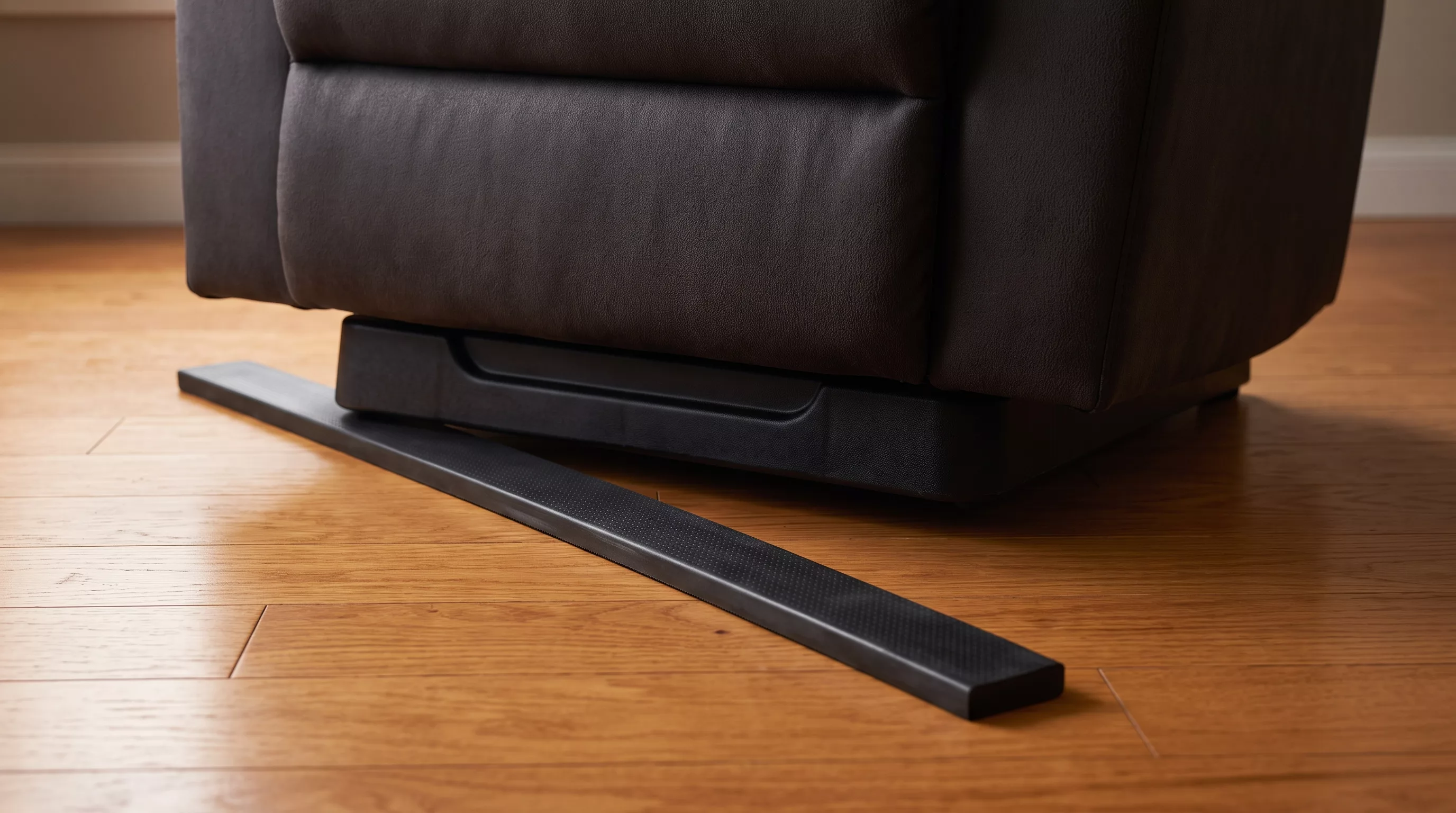
A set of recliner gripper rails like the Stay! recliner floor gripper pads does the job on hardwood, laminate, tile, and carpet, and they cost less than twenty dollars for a pair. The installation takes about two minutes:
- Clean the floor under the chair and wipe any dust off the base, because grit stops the gripper from seating.
- Tip the front of the recliner up just enough to slide a rail under each side of the front edge of the base.
- Let the chair down slowly and press the front of the base onto the rails, then sit and recline a few times to seat them.
- If the chair still walks, slide the rails a touch further back under the base so more of the chair’s weight sits on them.
Position the rails where the front legs or the front lip of the base actually meet the floor, not in the middle of the underside, because the movement comes from the front pushing point. If you have a round or swivel base instead of legs, go to the mat option in the next section, because that style of chair slides off a narrow rail.
Will a rug pad or rubber mat under the base keep a recliner still?
Yes, a rug with a non-slip pad, or a rubber mat under the whole base, keeps a recliner still, and it is the best option when the chair has a round or swivel base that does not sit on simple legs. A mat spreads the grip across the full footprint of the chair, so a recliner that rocks, swivels, or has a circular base cannot walk off the edge of a small rail.
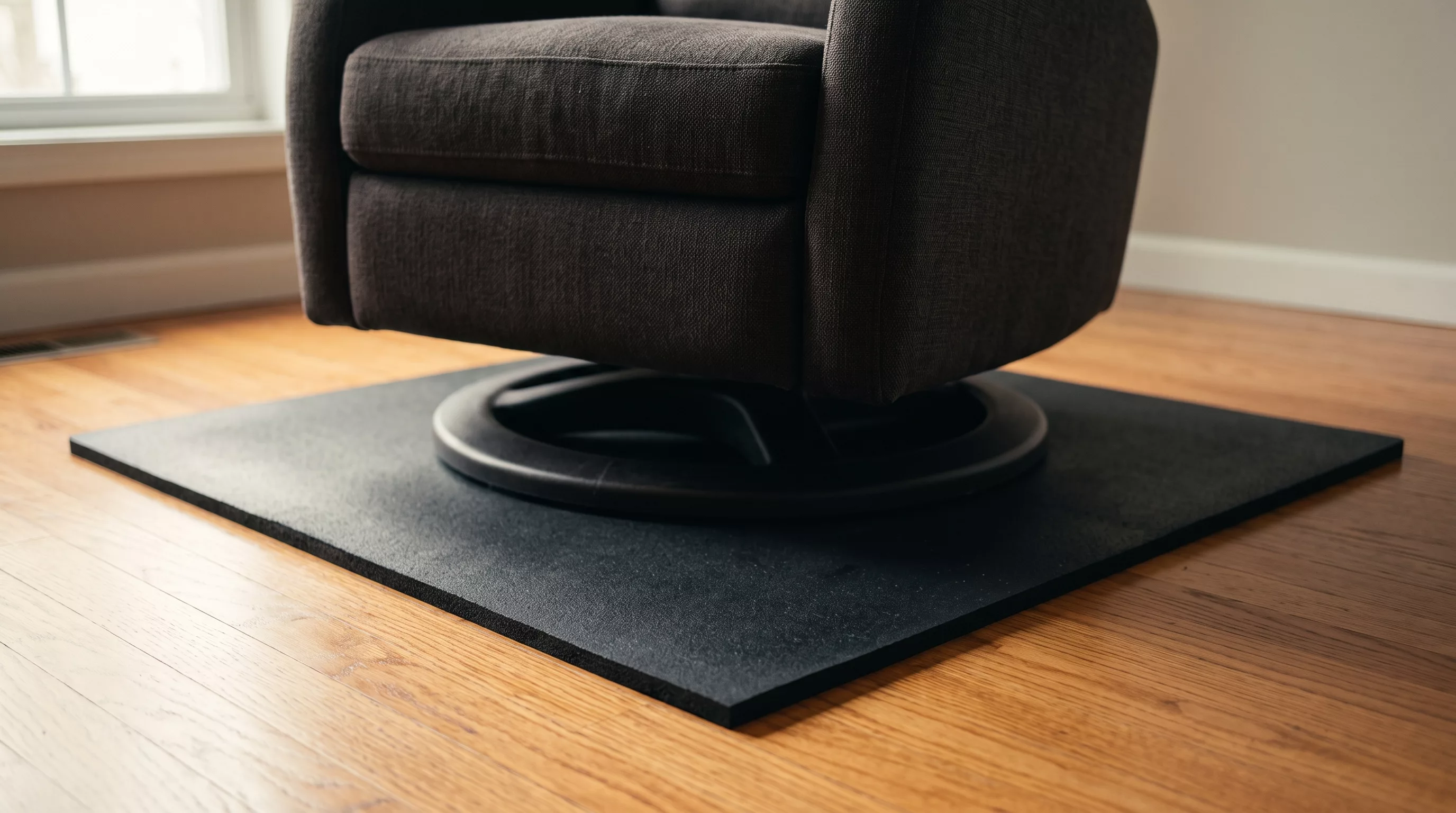
For the mat route I would buy a rubber under-recliner pad rather than a cheap PVC one, because PVC breaks down over time and can leave a sticky stain on the wood. A natural rubber mat like the Xinhw recliner pad for hardwood floors grips the floor, cushions the base, and can be trimmed with scissors to match the footprint. If you prefer a rug for the room, put a rubber rug pad underneath it and the recliner sits on top, which keeps the chair and the rug from both sliding.
Do furniture grippers or rubber feet work under a recliner?
Furniture grippers and rubber feet do work, but only on recliners with small individual legs, and they are a short-term fix on the front of a heavy chair. Peel-and-stick grippers that go on the bottom of each leg are cheap and easy, but the adhesive can soften in a warm room and the pad can discolor a light wood floor over time.
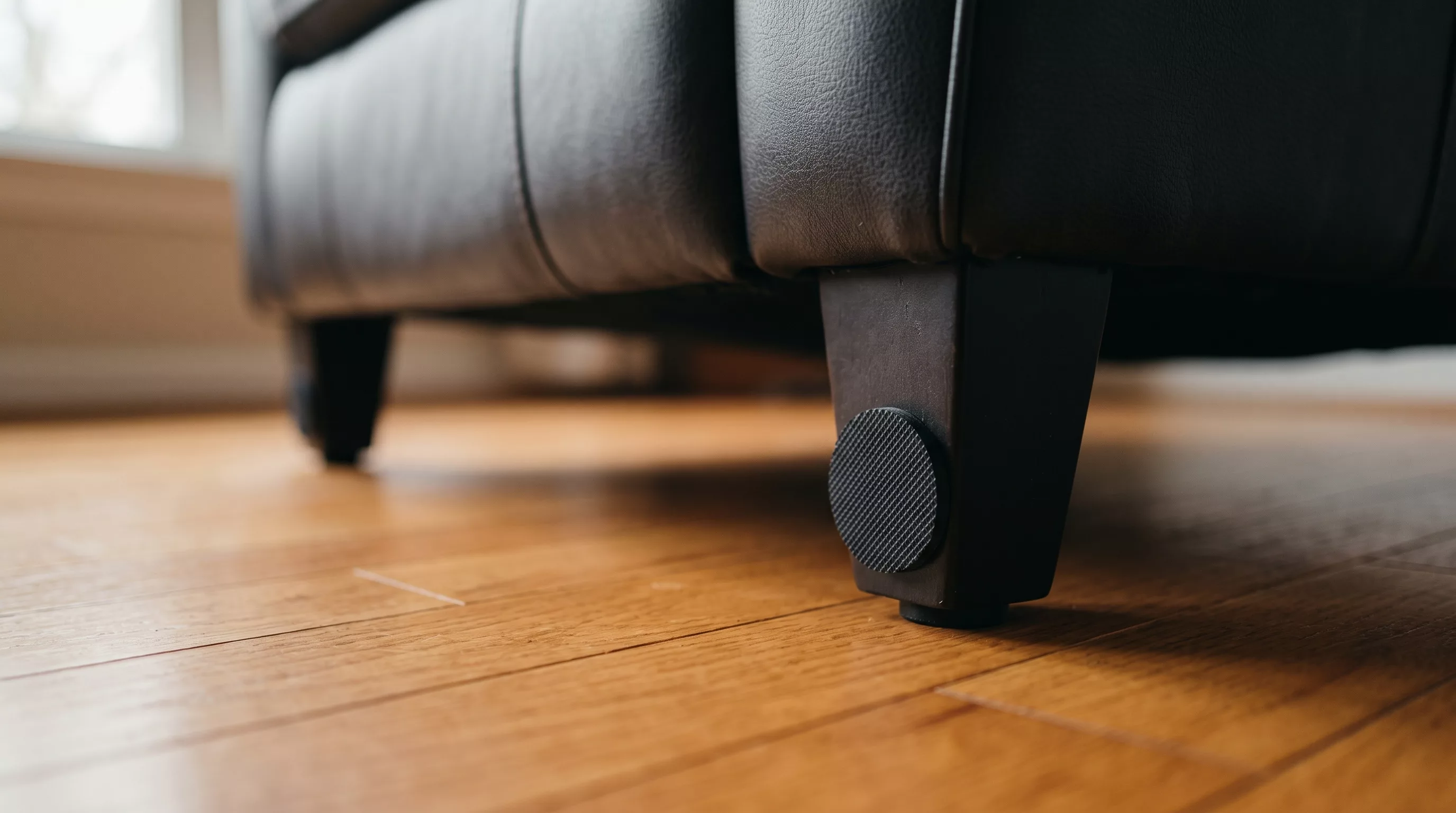
Rubber feet that slip over the legs are a cleaner option, and they are fine on a chair you move often. My honest advice after years of watching these on the sales floor: use them on the back legs of a recliner or on lightweight chairs, and use rails or a mat on the front of anything heavy, because that is where the recline force is strongest and where the cheap grippers wear out first.
How do I stop a power or push-back recliner from moving?
For a power recliner the same rails and mats work, but you position them to catch the base where the motor housing sits, and for a push-back you want the gripper under the front edge because that is where the chair walks when you close it. A power chair has a solid base housing that presses down evenly, which makes it a great candidate for a full mat rather than two narrow rails.
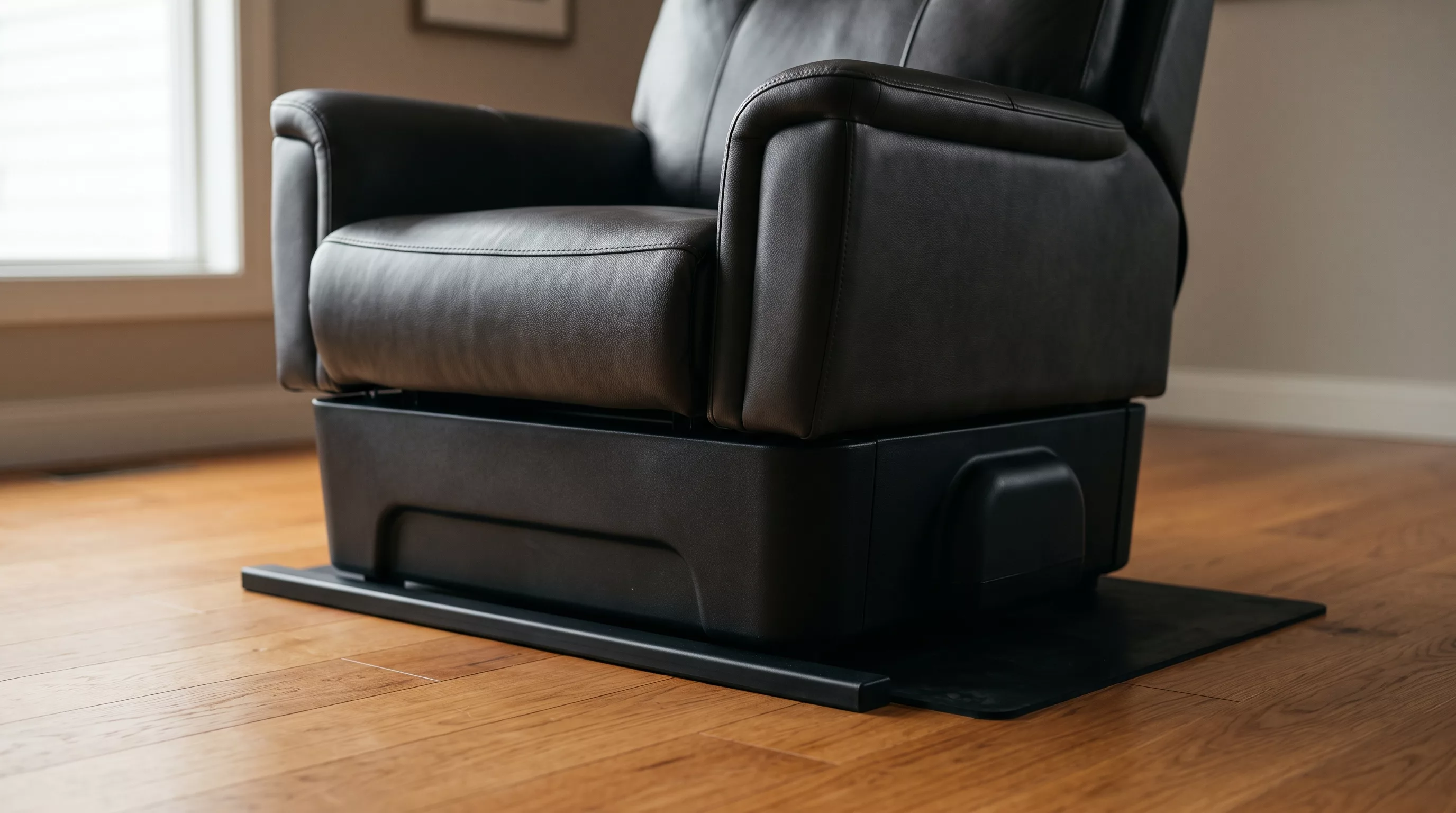
Unplug the chair and tilt it back so you can see where the housing touches the floor, then wipe that contact area clean. Never let a mat or rail push up into the motor housing or block the vents, and check once a month that the pad has not crept sideways. If the chair creaks as it moves, that is a separate problem, and my guide to fixing a recliner that squeaks when leaning back covers the maintenance for it.
Frequently asked questions
Can I use double-sided tape to stop a recliner from sliding?
Double-sided tape works for a day or two, but it leaves residue on the floor and loses its grip as the chair flexes, so it is not a real fix. Use a gripper rail or a rubber mat instead and the chair stays put without any cleanup later.
Will felt pads stop a recliner from sliding?
No, felt pads are the opposite of what you want here. They protect the floor by letting the chair slide, which is exactly the movement you are trying to stop. Use them on furniture you want to move, and use grippers or rubber on a recliner you want to hold.
How do I stop a recliner from sliding on carpet?
The same gripper rails work on carpet, because the weight of the chair presses them into the pile. If the chair still moves, add a heavy rubber rug pad under the base or switch to a full mat, since carpet hides how far the chair is traveling.
Should I put anything under a power recliner?
Yes, a gripper rail or rubber mat under the base is fine and recommended, as long as it does not lift the housing off the floor, block the motor vents, or catch the wiring when the chair reclines. Unplug the chair, slide the pad under, and test the full recline range before you leave it.
Why does my recliner slide when I stand up?
When you push off to stand, your weight drives the front of the base backward into the floor, and on smooth wood the chair skates instead of gripping. A gripper rail under the front edge stops that exact motion, and it also keeps the chair from scuffing the floor as you get up. If the footrest is what slips out of place rather than the whole chair, the guide to fixing a recliner footrest covers the spring and linkage repairs.
