
This post contains affiliate links; if you buy through one, we may earn a small commission at no extra cost to you.
Last Updated on September 4, 2026 by John Norton
The best fabric recliner for most buyers is a microfiber chair that wipes clean, stays cool against the skin, and costs less than a leather one with the same mechanism. I spent more than a decade selling, assembling, and repairing recliners on a furniture sales floor, and fabric chairs outsold leather in our store for one simple reason: they feel softer, breathe better in warm weather, and cost noticeably less for the same build. The five picks below are real Amazon listings I checked during this review, organized by the actual fabric each one uses, so you can match the upholstery to your home, your pets, and your climate instead of just the price.
Here is the honest tradeoff I tell every customer who asks. Fabric is warmer and quieter than leather, it never sticks to your skin on a hot day, and a good performance fabric shrugs off the daily wear that leather would show as cracks. The catch is that most fabrics stain more easily than leather and grab pet hair, which is why the fabric type matters more than the brand: a smooth microfiber wipes down almost like leather, while a plush corduroy feels wonderful but needs more care.
Each pick below gets its own pros and cons, its real Amazon listing photo, and a price check button, and I only recommend chairs where the listing clearly states a fabric upholstery rather than bonded or faux leather. Prices on Amazon shift constantly, so the button under each chair always shows the current number.
Table of Contents
Why choose a fabric recliner over leather?
Fabric recliners win on temperature, texture, and price. In the store, customers who tried a leather chair on a warm day usually complained it stuck to their arms and legs, while the fabric chairs next to it stayed dry and comfortable, and that was almost always the deciding factor. Fabric also makes less noise when you move around, which matters if you plan to nap in the chair or share the room with someone watching television, and it usually costs noticeably less for the same mechanism.
Those tradeoffs are real, though: fabric absorbs spills instead of shedding them, and most woven fabrics collect pet hair and dust, so a fabric recliner needs a vacuum or a lint roller more often than a leather one. That is why the specific fabric matters, because a smooth microfiber behaves almost like leather for cleaning, while a fluffy chenille needs gentler treatment.
What fabric should a recliner be upholstered in?
Five fabric types cover almost every recliner you will find on Amazon, and each one changes how the chair lives in your home. Microfiber is the most practical, because the weave is so tight that spills sit on the surface instead of soaking in, and it cleans up with a damp cloth. Polyester is the most common upholstery on affordable chairs, tough and easy to dye into any color, which is why brands like Christopher Knight Home use it. Chenille is the softest of the group, with a fuzzy, warm surface that feels wonderful but pils with heavy use. Corduroy gives you the same softness with a ribbed texture and a more casual, retro look, and patterned textiles like the paisley on our traditional pick add character while hiding stains better than a plain color.
Think about who uses the chair before you pick a fabric. A smooth microfiber or a tight polyester handles kids and pets far better than a plush chenille or corduroy, and in a hot climate a breathable woven fabric beats leather every time. There is no universally best material, which is why the picks below are spread across these five types.
How I picked these fabric recliners
I kept only chairs where the Amazon listing clearly stated a real fabric upholstery, checked the photo against the exact model and ASIN, and confirmed the mechanism works the way the listing describes. I spread the picks across the fabric types customers actually ask about in the store, and I ranked them partly on owner ratings, because a fabric chair that rates poorly usually means the material pilled, stained, or wore through sooner than it should.
1. Lexicon Polished Microfiber Wall Hugger Recliner – Best Overall

The Lexicon is the fabric recliner I would point most buyers to, because the polished microfiber gives you the practical side of leather, easy cleaning and a smooth surface, with the soft feel of fabric. The tool free clip in backrest means you set it up in minutes without hunting for a wrench, the 39.5 inch wide frame fits standard doorways and small rooms, and the wall hugger mechanism needs only a few inches of clearance behind it. At around $105 it undercuts most power recliners while still giving you a genuine reclining chair, with the tradeoff that everything is manual, so there is no motor, heat, or USB port.
See Best Price for the Lexicon Microfiber Recliner2. Christopher Knight Home Alexis Fabric Push Back Recliner – Best for Traditional Rooms
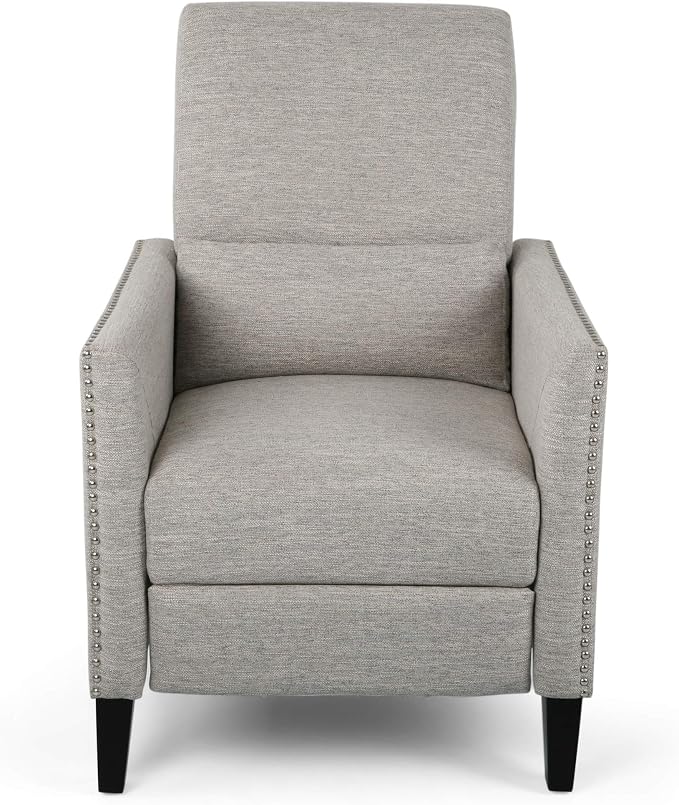
The Christopher Knight Home Alexis is the fabric recliner for people who want the chair to look like a piece of furniture instead of a hospital seat. The tufted polyester back and rolled arms read as a classic accent chair from across the room, and the push back mechanism opens the recline with your own body weight, which means fewer moving parts to fail than a motorized track. In the store this is the chair customers kept coming back to when they wanted something that blended into a traditional living room rather than dominating it. It is the priciest pick here at around $287, but the polyester stays cooler than leather in summer and the chair looks far more expensive than the price suggests.
See Best Price for the Christopher Knight Alexis Recliner3. Kensington Hill Beaumont Paisley Fabric Recliner – Best for Traditional Décor
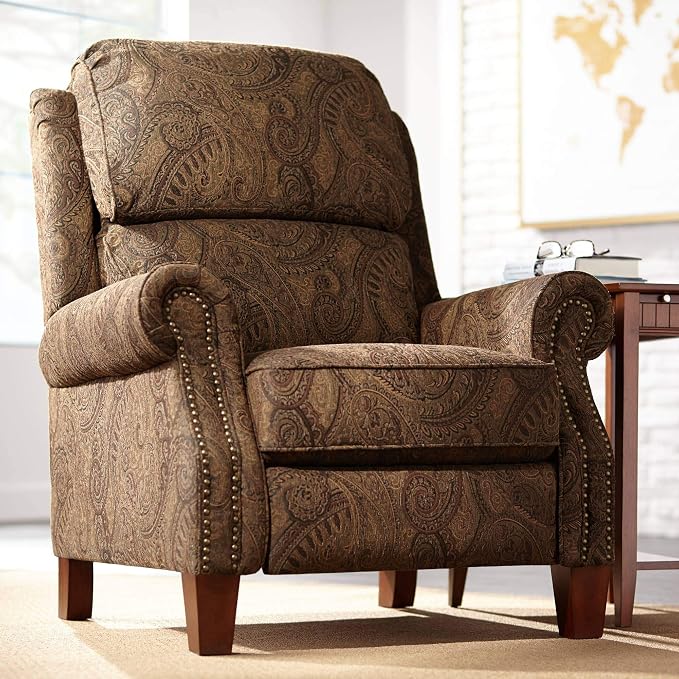
If you want a fabric recliner with real character, the Kensington Hill Beaumont is the one. Its paisley patterned textile looks like a proper piece of cottage or farmhouse décor, and it doubles as a genuine three-way recliner with a push through arm mechanism and tension adjusters that let you tune how easily the footrest opens. On the sales floor I told customers this is the adjustment they would wish their old chair had. It reclines to 70 inches deep when fully open, holds up to 350 pounds on a hardwood seat box, and the coil seat cushions stay firm instead of sagging. The honest caveats are the weight, roughly 98 pounds to move, and the fact that a light patterned fabric needs fast treatment of spills, so it suits a tidy living room more than a busy family den.
See Best Price for the Kensington Hill Beaumont Recliner4. Lexicon Corduroy Pushback Recliner – Best Cozy Fabric on a Budget

The corduroy Lexicon is the fabric recliner for anyone who wants a soft, cozy seat without spending much. The ribbed corduroy gives the chair a warm, casual look that fits a reading nook or a bedroom, and it feels noticeably softer than microfiber or leather when you first sit down. It is compact enough for a corner or narrow room, sits on a solid wood frame with a metal base, and the backrest clips in for easy assembly. At around $130 it is one of the most affordable genuine fabric recliners I could verify on Amazon, and the push back mechanism needs almost no clearance behind it. The seat cushion is firm rather than plush, and corduroy needs more careful cleaning than a smooth fabric, so I would treat it as an occasional reading chair rather than a daily workhorse.
See Best Price for the Lexicon Corduroy Recliner5. Electric Adjustable Chenille Recliner with Remote – Best Power Fabric Pick
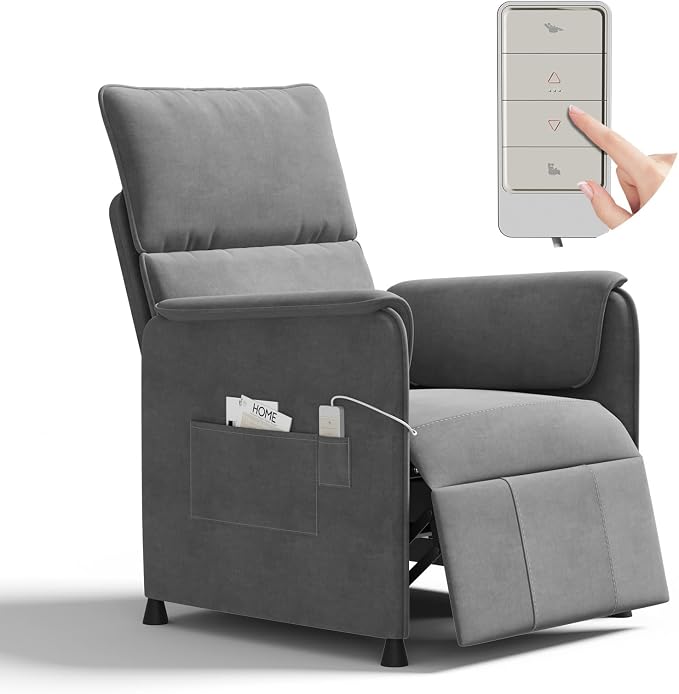
If you want a motor but refuse to sit on bonded leather, this chenille recliner is the answer. It combines the softest fabric in this roundup with a power mechanism that runs on a remote, so you recline and stand up at the touch of a button, which is a genuine relief for knees and backs. The padded backrest and thick seat cushion make it a comfortable daily chair, and at around $150 it is the cheapest powered option here. Chenille is the softest fabric of the group, but it is also the most likely to pill with heavy daily use, and this chair skips the cup holders, LED lights, and tray tables that pricier theater seats carry.
See Best Price for the Chenille ReclinerFabric recliners compared
The table below sums up the five picks so you can match the fabric to your home and your budget.
| Model | Fabric type | Mechanism | Approx. price | Best for |
|---|---|---|---|---|
| Lexicon Polished Microfiber | Microfiber | Manual wall hugger | $105 | Overall value |
| Christopher Knight Alexis | Polyester | Manual push back | $287 | Traditional rooms |
| Kensington Hill Beaumont | Patterned textile | Three-way push through | Varies | Traditional décor |
| Lexicon Corduroy | Corduroy | Manual push back | $130 | Cozy budget seat |
| Electric Chenille | Chenille | Power with remote | $150 | Power comfort |
How to keep a fabric recliner looking good
Fabric needs a little more attention than leather, but the right routine keeps a fabric recliner looking new for years. Vacuum the seat and back weekly with an upholstery brush attachment so dust and pet hair never work into the weave, and blot spills the moment they happen with a clean cloth and a little mild soap and water, never rubbing. For the plush fabrics on this list, corduroy and chenille, use a lint roller or a soft brush to keep the pile looking fresh.
Frequently asked questions
Are fabric recliners better than leather recliners?
For most people, yes, because fabric feels softer, breathes better in warm weather, costs less, and never sticks to the skin the way leather can. The tradeoff is that fabric stains more easily and grabs pet hair, so a smooth microfiber or tight polyester suits busy households better than a plush corduroy or chenille.
What is the most durable fabric for a recliner?
A tightly woven microfiber or polyester is the most durable and the easiest to clean, because spills sit on the surface instead of soaking into the weave. Fluffy fabrics like chenille and corduroy feel softer but pill and show wear sooner with daily use.
How do you clean a fabric recliner?
Vacuum it weekly with an upholstery attachment, blot spills immediately with mild soap and water, and use a lint roller for pet hair on plush fabrics. Avoid rubbing a spill, because that pushes the stain deeper into the fabric. Our how to clean a leather recliner guide covers the leather side if you are weighing both materials.
Do fabric recliners get hot?
No, fabric is the opposite of leather, because woven fabrics let air through, so a fabric recliner stays cooler in summer and does not stick to your skin. Plush fabrics like chenille feel warmer than microfiber, which is one reason to pick a smooth fabric in a hot climate.
Are fabric recliners good for pets?
They are a mixed bag, honestly. Fabric is gentler on claws than leather and rarely shows the scratches leather does, but it collects pet hair and holds odors. If you have pets, choose a smooth microfiber or tight polyester and vacuum often, or read our recliners with ottoman and best wall hugger recliners roundups for more everyday options.
Which fabric recliner should you buy?
For most people the Lexicon Polished Microfiber is the answer, because it gives you the easy cleaning of leather with the soft feel of fabric at around $105, and it fits a small room without drama. If you want a chair that looks like proper furniture in a traditional living room, the Christopher Knight Alexis is the best looking choice at around $287, and if a power motor is non-negotiable but leather is not, the electric chenille recliner gives you a soft fabric seat with a remote at around $150. Whatever you choose, match the fabric to the room and the routine, not just the price. For mechanism-focused shoppers, our best manual recliner and best power recliner guides cover chairs without the fabric angle.
