
This post contains affiliate links; if you buy through one, we may earn a small commission at no extra cost to you.
Last Updated on August 28, 2026 by John Norton
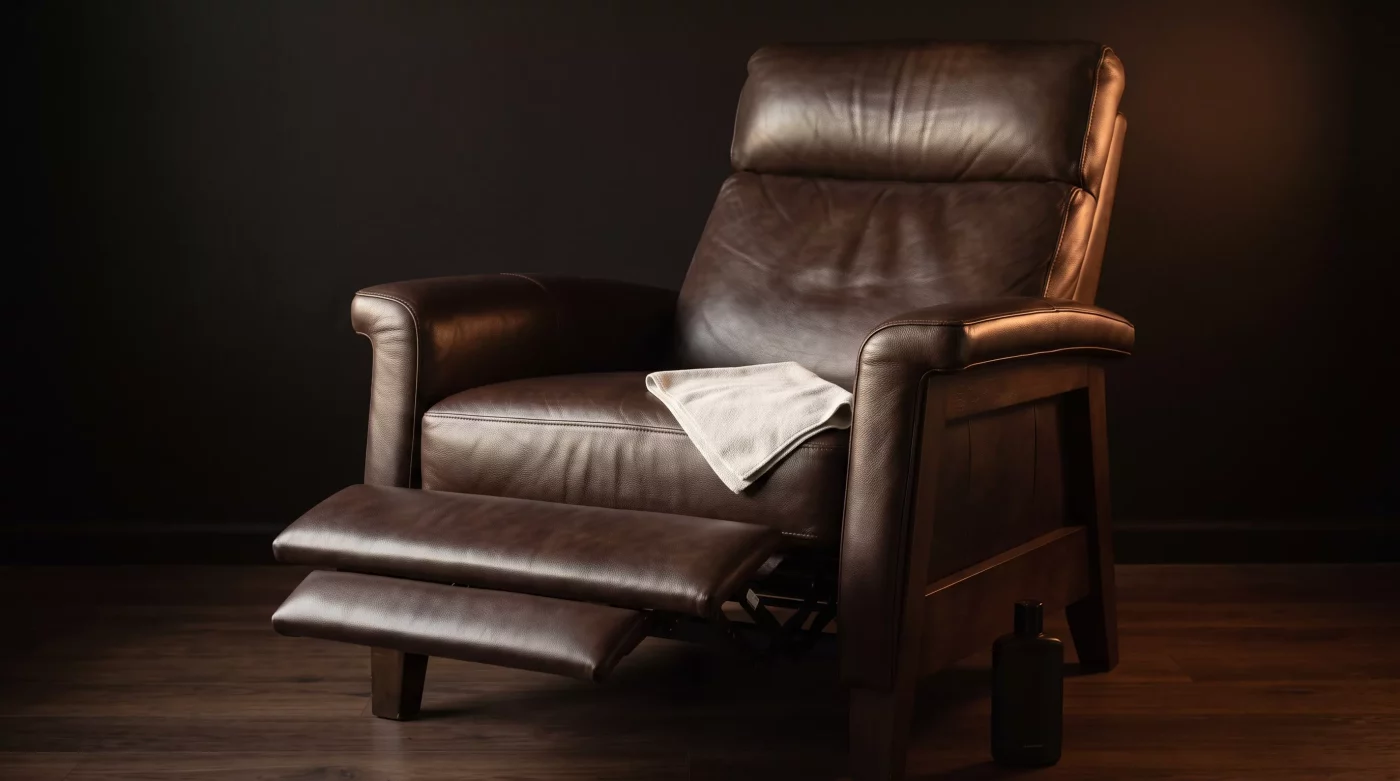
You can clean a leather recliner with a soft cloth, a leather-safe cleaner, and a conditioner, and the whole job takes about twenty minutes with the chair fully opened out. The key is to know what kind of leather you are actually sitting on first, because bonded and faux leather need a gentler touch than top-grain, and the wrong product can strip the finish or peel the surface.
In the years I spent selling and repairing recliners, more leather chairs got ruined by over-cleaning than by neglect. A little regular care keeps the leather soft and the mechanism working, and it protects the investment far better than a deep scrub once a year.
This guide walks through the exact routine I recommend to customers, from telling your leather types apart to cleaning the footrest and the mechanism without damaging the chair.
Table of Contents
What kind of leather is on my recliner?
Check the tag and the feel of the surface, because your cleaning method depends on which of the common leather types your chair uses. Full-grain and top-grain leather are the real deal, supple and natural with visible grain, and they take a dedicated leather cleaner and conditioner well. Corrected or coated leather has a smoother, more uniform surface and a sealed finish that handles mild cleaners but hates solvents. Bonded leather and faux or PU leather are the most sensitive, with a thin or plasticky surface that can peel if you soak it or scrub it hard.
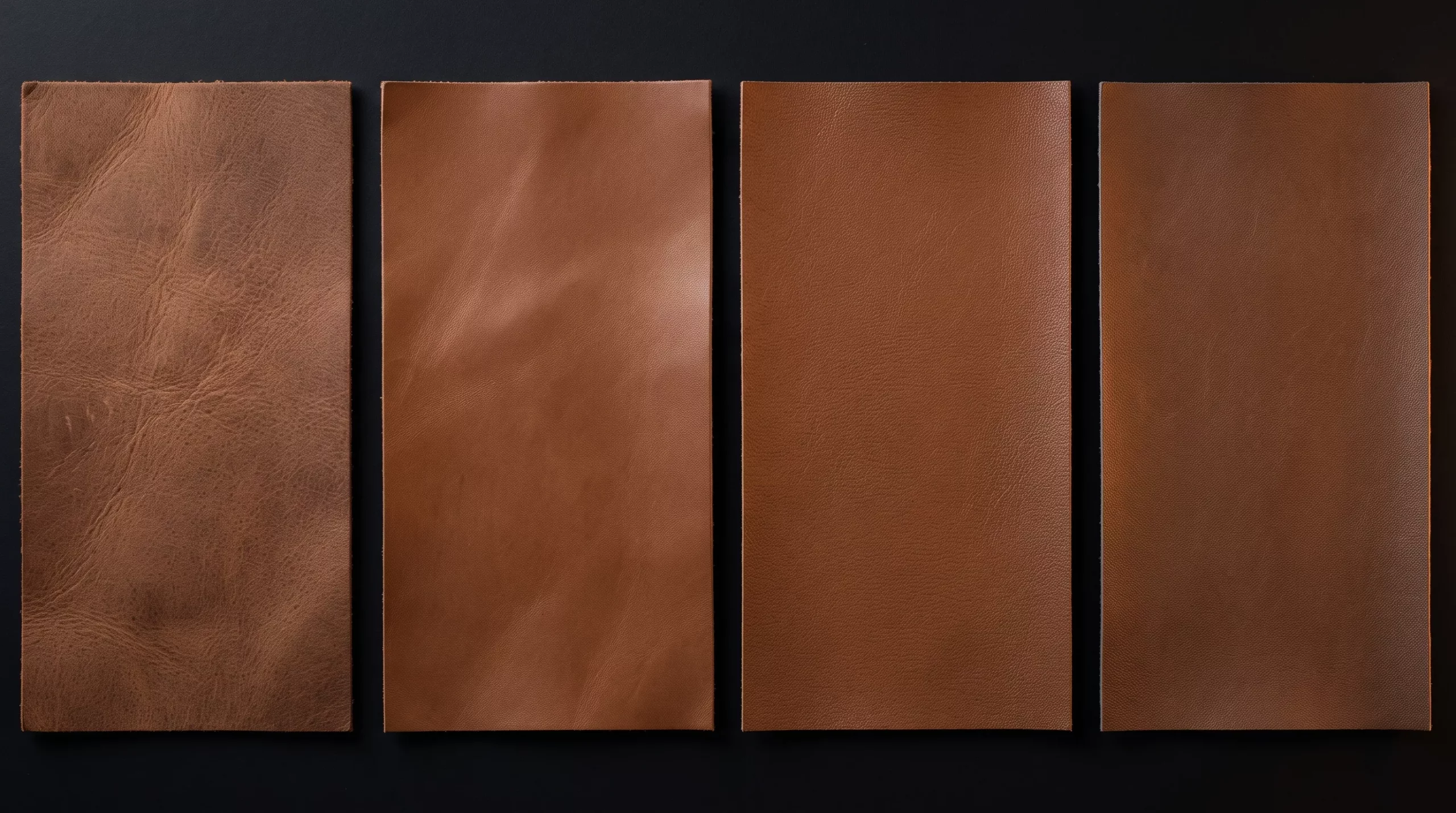
A quick feel test helps: real top-grain warms under your hand and shows pores, while bonded and faux leather feel cooler, smoother, and a little plasticky. If you are not sure, treat the chair as fragile and start with the mildest method, because you can always step up, but you cannot undo a cleaner that lifted the finish.
What should I use to clean a leather recliner?
Use a product made specifically for leather, not an all-purpose spray or a disinfectant wipe, because those often contain alcohol or ammonia that strip the natural oils and dull the color. A dedicated leather cleaner and conditioner, like the Leather Honey care kit, is formulated to clean without pulling the finish and to put moisture back in afterward. For a budget option on real leather, a mild soap like castile worked into a light foam and wiped off with a damp cloth works, but the conditioner step is what keeps the leather from drying out.
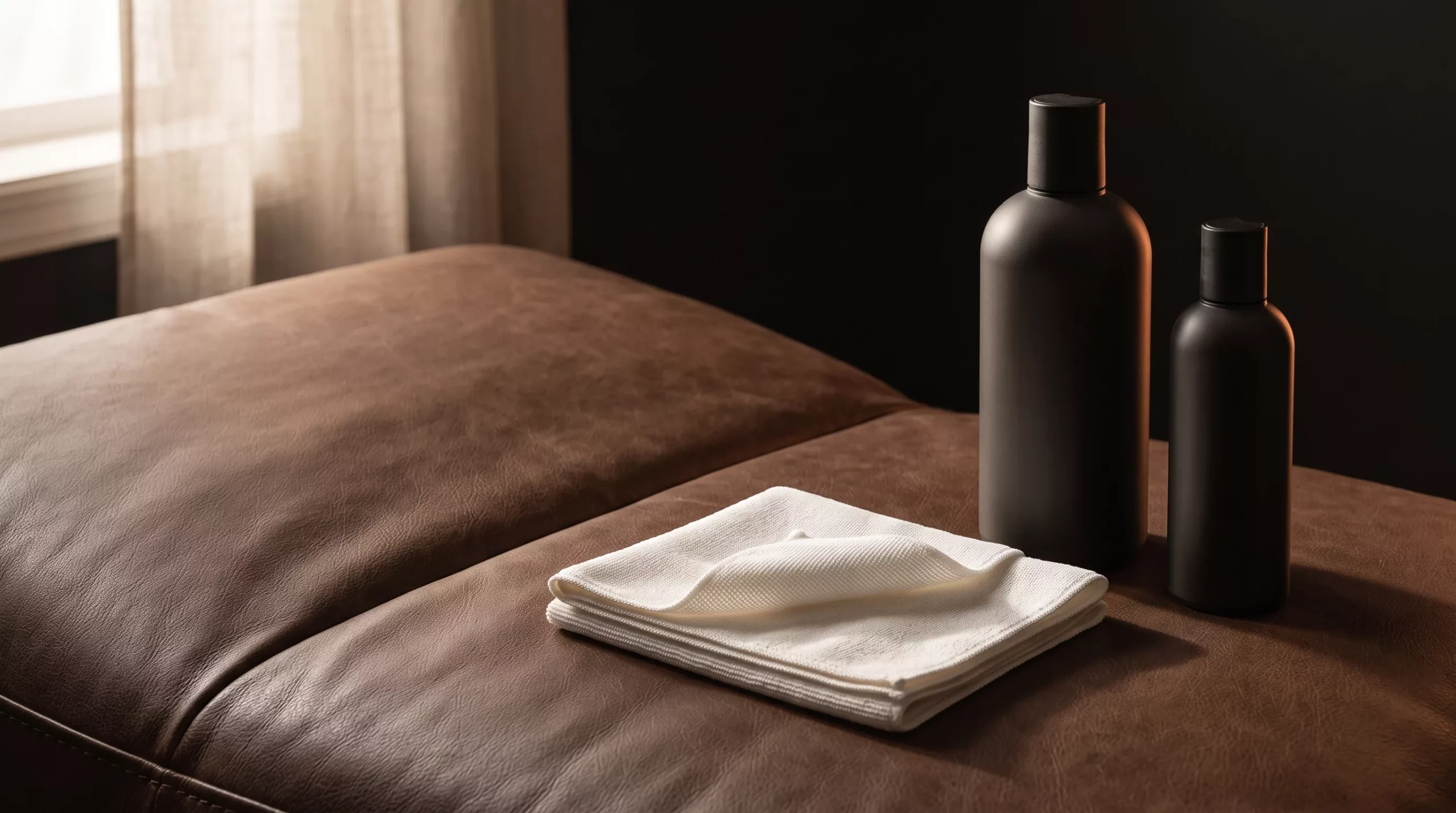
You also want a soft, lint-free cloth or a microfiber cloth, never a scrubby pad or a paper towel that can leave fine scratches. Skip furniture polish, wax, and anything with silicone in it for the upholstery, since they build up and attract dust.
How do I clean a leather recliner step by step?
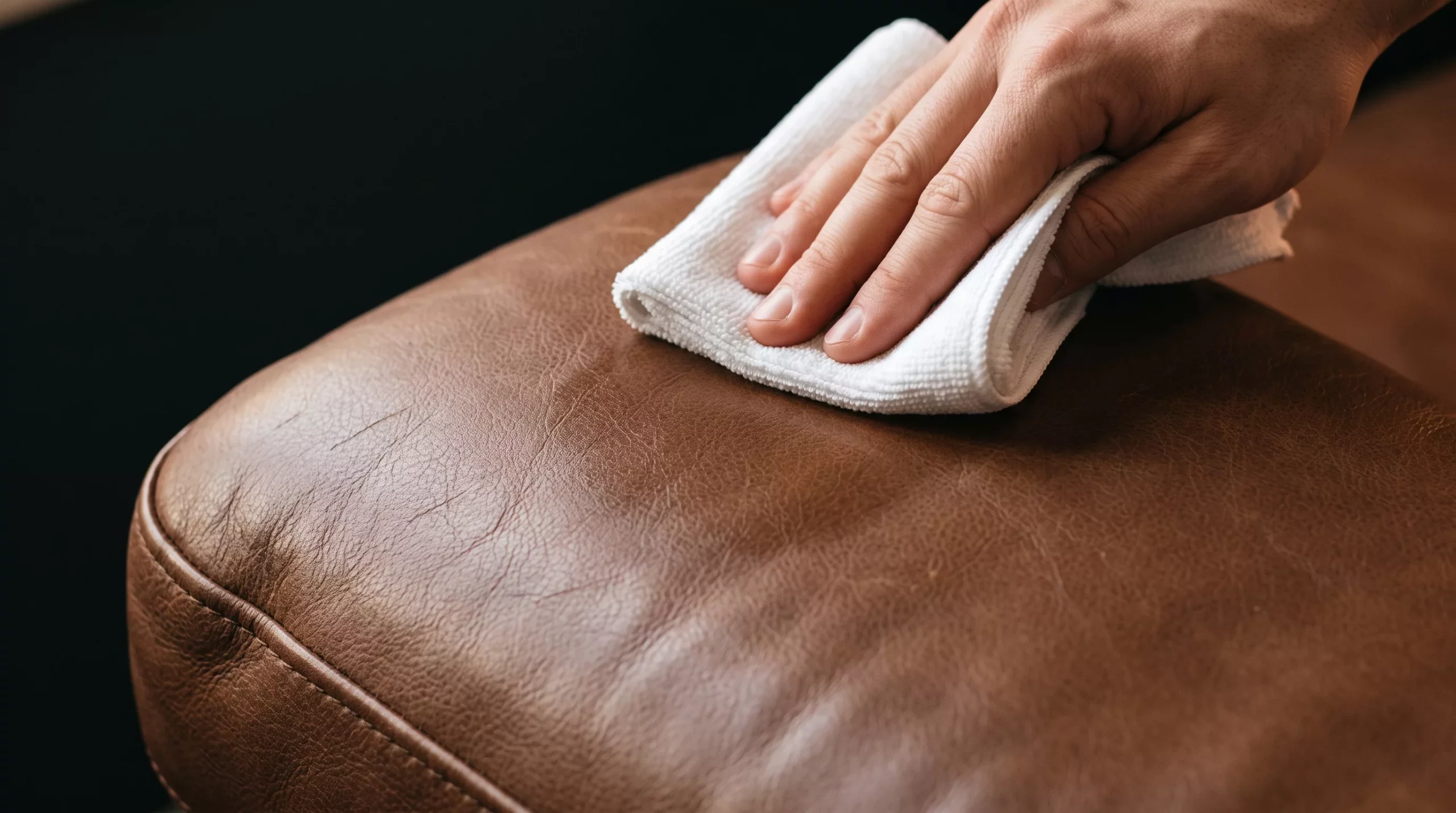
Open the recliner fully so you can reach the creases, the footrest, and the folds where dirt collects, then work in small sections from the seat up. Follow this order and the leather comes out clean without being soaked.
- Vacuum the whole chair with a crevice tool, getting into the seams and the gap where the seat meets the footrest, so loose grit and crumbs do not scratch the leather as you wipe.
- Patch test your cleaner on a hidden spot under the seat and wait a few minutes to make sure it does not fade or stiffen the leather.
- Put a little leather cleaner on a soft cloth, never directly onto the chair, and work in small circles over the seat, back, arms, and footrest, one section at a time.
- Wipe off the residue with a clean, slightly damp cloth, then dry the section immediately with a towel so moisture does not sit in the folds.
- Finish real leather with a thin, even layer of conditioner, paying extra attention to the flex points where the back and footrest bend, and let it dry before you close the chair.
After you clean, open and close the recliner a few times so no moisture stays trapped in the creases, and never use a hairdryer or heater to speed the drying, because rapid heat can shrink and crack the leather.
How do I clean the footrest and the mechanism without causing damage?
Give the footrest its own pass, because shoes rest on it and it takes the most scuffs, and clean the exposed mechanism with dry tools only. Wipe the footrest top and edges with your leather cleaner, and pay attention to the heel area where grit digs in. For the moving parts under the chair, use the vacuum crevice tool to clear crumbs and dust, and wipe the metal with a dry cloth, but never spray cleaner or water into the mechanism, the springs, or the wiring on a power recliner. Liquid in the mechanism can reach the motor and cause a repair you did not want.
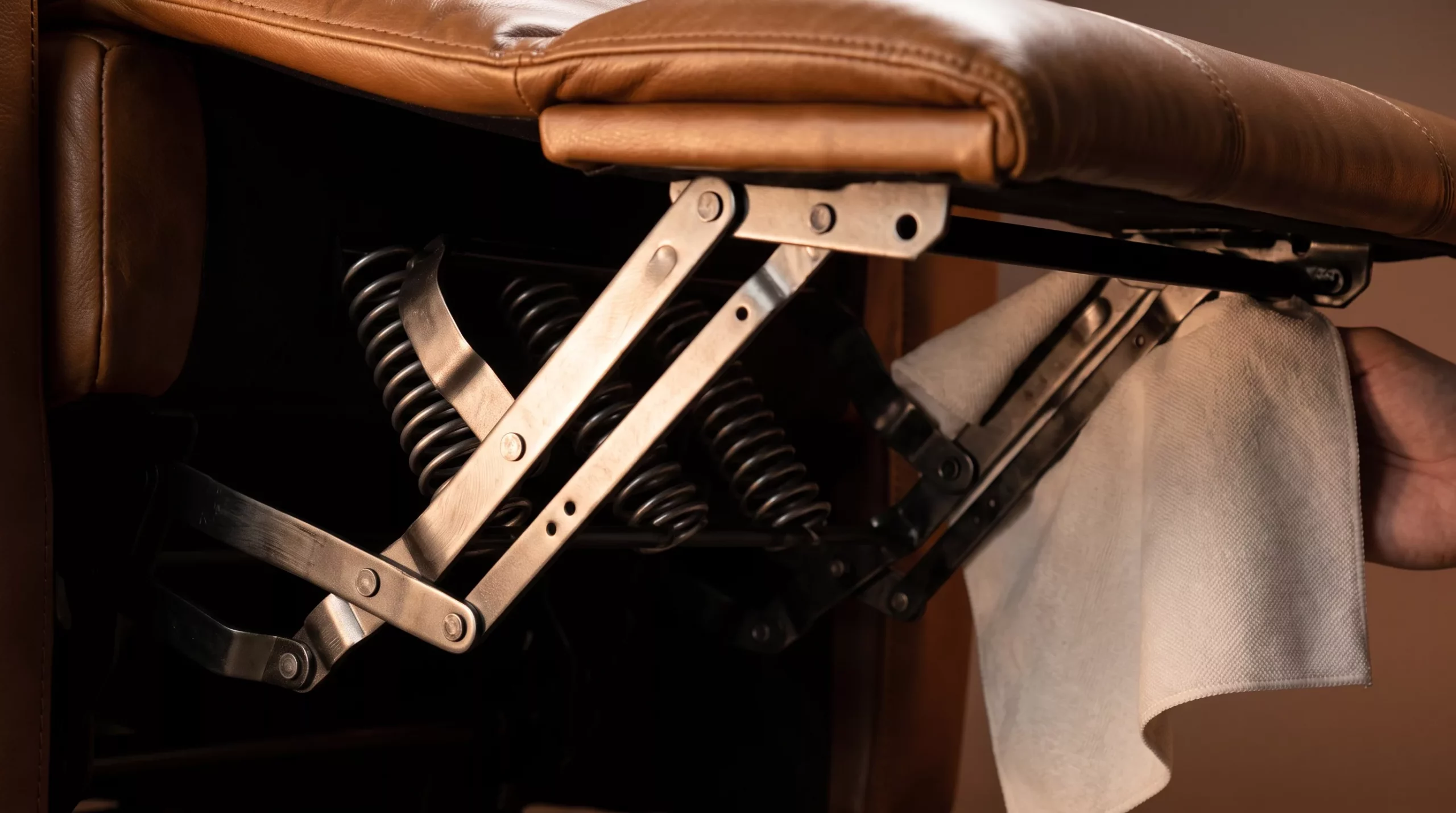
On a power recliner, unplug the chair before you clean around the buttons and ports, and wipe those areas with a barely damp cloth only. If the footrest itself is not holding, that is a separate repair, and my guide to fixing a recliner footrest covers the spring and linkage fixes.
How do I keep a leather recliner from cracking and peeling?
Most cracking and peeling comes from dryness plus friction, so the two big protections are regular conditioning and keeping the chair out of harsh conditions. Keep the recliner out of direct sun and at least a foot away from radiators and heat vents, because heat pulls the moisture out of the leather and makes it stiff. Wipe away grit from the creases before you close the chair, since fine dirt acts like sandpaper every time the footrest folds. Condition real leather two or three times a year, especially on the flex points, to keep it supple.
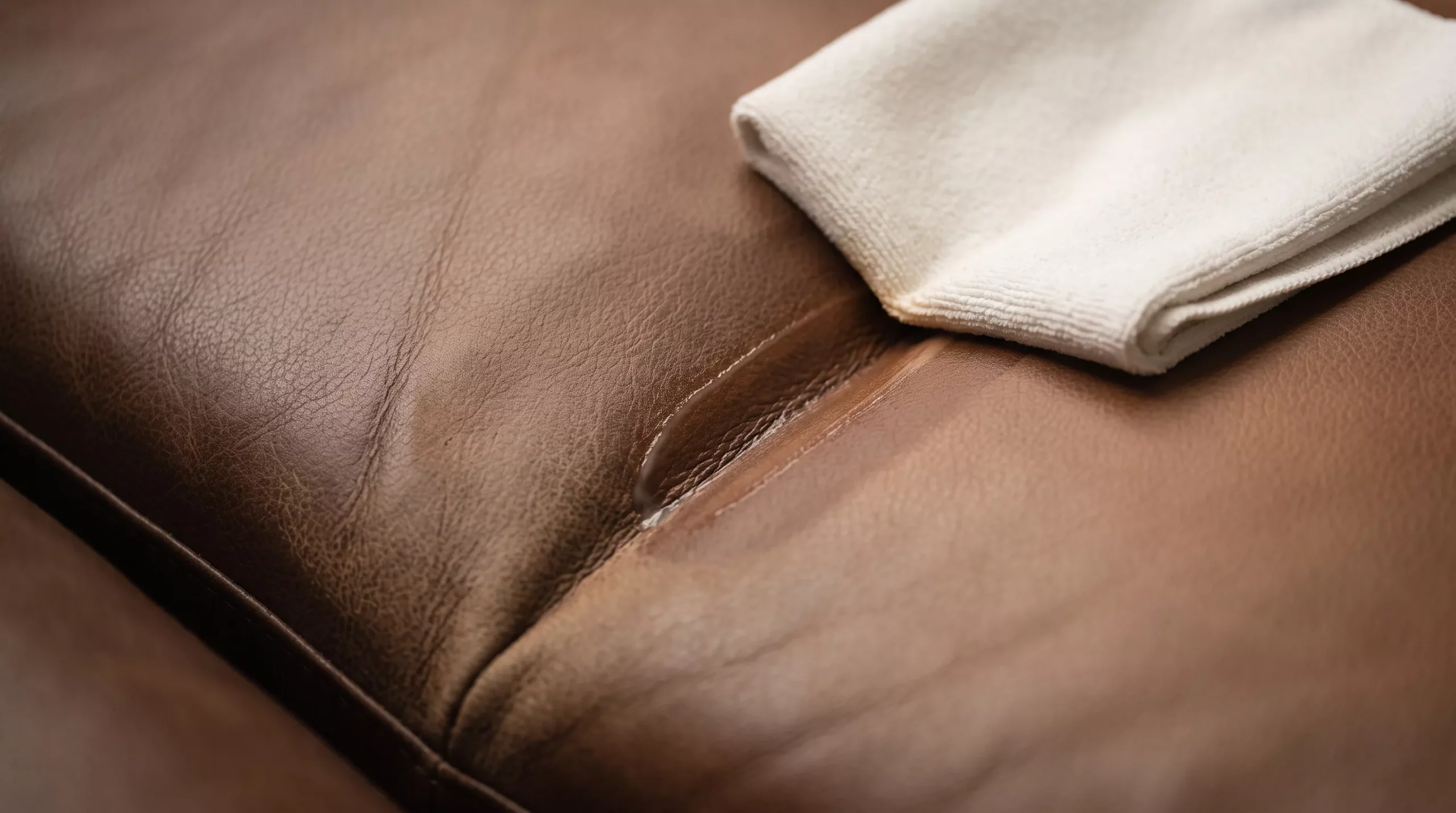
For bonded and faux leather, lean on gentle cleaning and temperature control rather than heavy conditioners, because too much conditioner can loosen the bonded layer and speed up peeling. If you spot a cracked or sagging frame rather than just worn leather, stop using the chair and get it checked, because that is a structural problem, not a care one.
Frequently asked questions
How often should I clean a leather recliner?
Wipe high-touch spots and vacuum weekly, and give the whole chair a deep clean and condition every few months, or more often with kids or pets in the house.
Can I use household cleaners or wipes on leather?
No, most all-purpose sprays and disinfectant wipes contain alcohol or ammonia that strip the finish and dry out the leather, so use a product made for leather and test it in a hidden spot first.
Can I use water to clean a leather recliner?
A slightly damp cloth is fine for wiping, but do not soak the leather, since too much moisture can stiffen or damage it. Blot spills quickly rather than rubbing them in.
Why is my leather recliner cracking and peeling?
Cracking usually comes from dryness and friction, made worse by sun and heat, while peeling points to bonded or faux leather that has been over-cleaned or over-conditioned. Condition real leather regularly and keep the chair out of direct sun and heat.
Does a leather recliner need conditioner?
Real leather does, two or three times a year, because conditioning puts back the natural oils that cleaning and use remove. Bonded and faux leather need far less, and too much conditioner can actually cause peeling.
