
This post contains affiliate links; if you buy through one, we may earn a small commission at no extra cost to you.
Last Updated on September 1, 2026 by John Norton
The best manual recliner for most buyers is one that leans back smoothly without a motor, a power cord, or a remote you have to dig for. I spent over a decade on the sales floor of a recliner store, and the manual chairs I sold outnumbered the power ones for most of that time, because a lot of customers simply wanted a chair that worked with their own strength and nothing to plug in. The five picks below are real Amazon listings I checked during this review, each with a genuine push back or lever mechanism and each matched to a different room, body type, and budget.
The thing to understand about manual recliners is that the mechanism is the whole tradeoff. Push back chairs ask you to lean your weight against the backrest to open the footrest, and that takes more effort than pressing a button, so the build quality and the way the mechanism is adjusted matter more than the upholstery color. If the chair fights you every time you sit down, no fabric or styling will save it.
This guide explains what to look for on the mechanism, weight capacity, and fully reclined size, then walks through five manual recliners that actually operate smoothly. I only list specs and weights I confirmed on the live listing at the time of writing, and prices do shift, so the button under each pick always shows the current number.
Table of Contents
How I picked these manual recliners
I kept only chairs where the listing clearly states a manual push back or manual lever mechanism, checked the photo against the exact model and ASIN, and spread the picks across the use cases I saw on the sales floor: a traditional three-way chair for the living room, a compact chair for apartments, a swivel with a matching ottoman, a glider for people who like motion, and an oversized wingback for bigger builds. I also ranked them on owner ratings, because a manual chair that rates poorly usually means the mechanism felt stiff or cheap in practice.
1. Kensington Hill Beaumont 3-Way Recliner – Best Overall
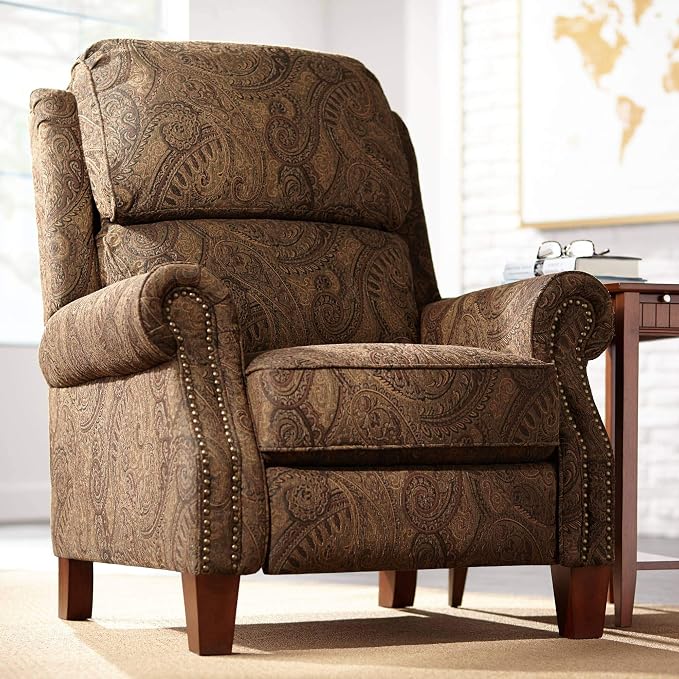
The Kensington Hill Beaumont is the manual chair I would point most buyers to, because it is a true three-way recliner with a push through arm mechanism and tension adjusters that let you tune how easily the footrest opens. In the store, this is the adjustment customers always wished their old chair had: a chair that opens too easily throws your legs up, and one that opens too hard is a workout, so being able to dial in the resistance is genuinely useful. It reclines to 70 inches deep when fully open, holds up to 350 pounds, and the rolled arms and nailhead trim give it a traditional look that fits a living room rather than a man cave. The coil seat cushions and hardwood seat box feel solid under you, and the flipper ottoman extends as part of the footrest mechanism, so there is no separate piece to kick around.
2. Lexicon Corduroy Push Back Recliner – Best for Small Spaces

The Lexicon is the manual recliner I would put in an apartment, a bedroom, or any room where a full-size chair would swallow the space. It is only 27 inches wide, and when the footrest opens the chair reaches about 61 inches deep, which is plenty for a nap but far more compact than the 70-inch depth of the Beaumont. The corduroy upholstery gives it a soft, warm look that works in a reading nook or a nursery, and it comes in six colors so you can match the room instead of the other way around. It holds up to 300 pounds, needs only about 16.5 inches of clearance behind it for the backrest to travel, and the solid wood frame with a metal base feels steadier than chairs at this size usually do.
3. BenchMaster Newport Swivel Recliner with Ottoman – Best Swivel
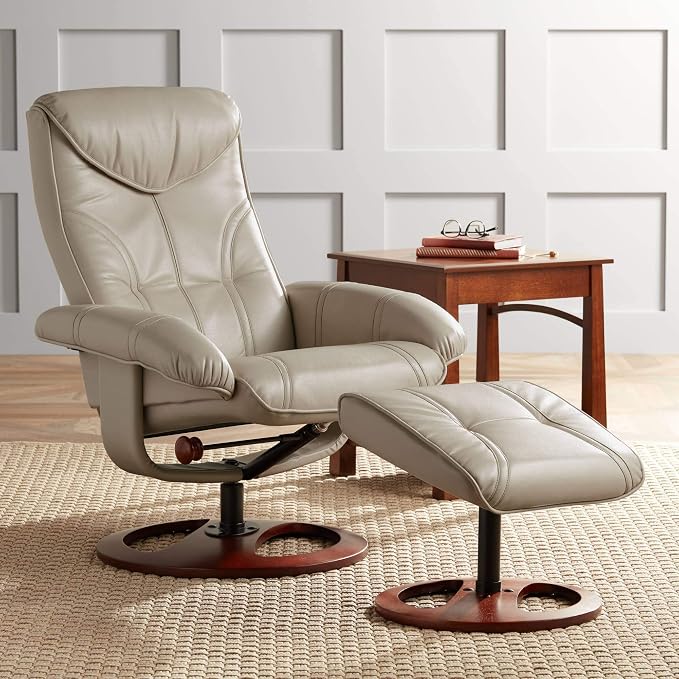
If you want a chair that turns to face the conversation instead of staying bolted to one angle, the BenchMaster Newport is the manual recliner to look at. It swivels a full 360 degrees, reclines to about a 45 degree angle, and comes with a matching ottoman, so you get the foot support of a separate piece without the price of buying two items. The taupe bonded leather is easy to wipe clean, the walnut finish base looks more expensive than the price, and at about 49 pounds it is light enough for one person to move between rooms. The honest catch is the weight limit: this chair is rated to 220 pounds, which is lower than the other picks here, so heavier users should steer toward the Beaumont or the Salome.
4. Coaster Greer Swivel Glider Recliner – Best Glider
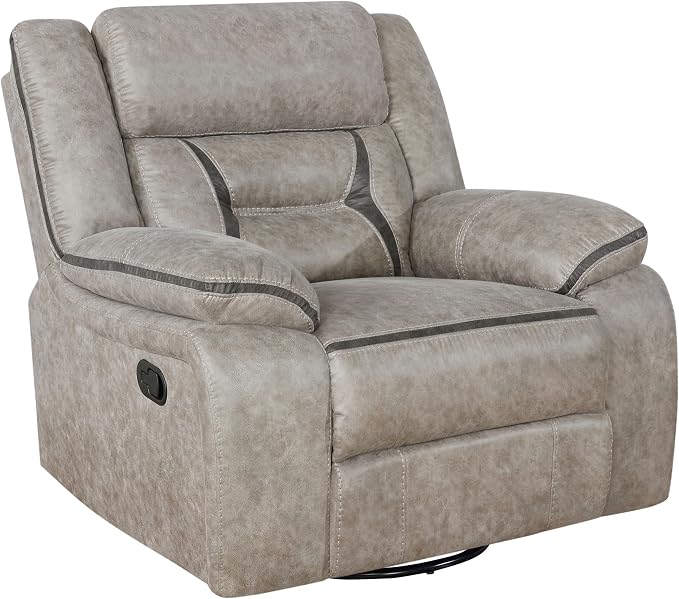
The Coaster Greer is the manual recliner for people who like a gentle back and forth motion while they read or watch a show. It combines a glider base with a swivel, so it rocks softly, turns, and reclines with a manual mechanism, all in one chair, and it carries a perfect five star owner rating at the time of writing, which is rare in this category. The pocket coil cushions under the seat give you the kind of support that stays firm instead of sagging into a pit after a few months, and the taupe leatherette finish blends into a neutral living room. At 41 inches wide it is on the larger side for a single chair, so measure the corner before you order, but the motion and the cushion support make it a genuinely comfortable daily seat.
5. Great Deal Furniture Salome Oversized Wingback – Best Oversized
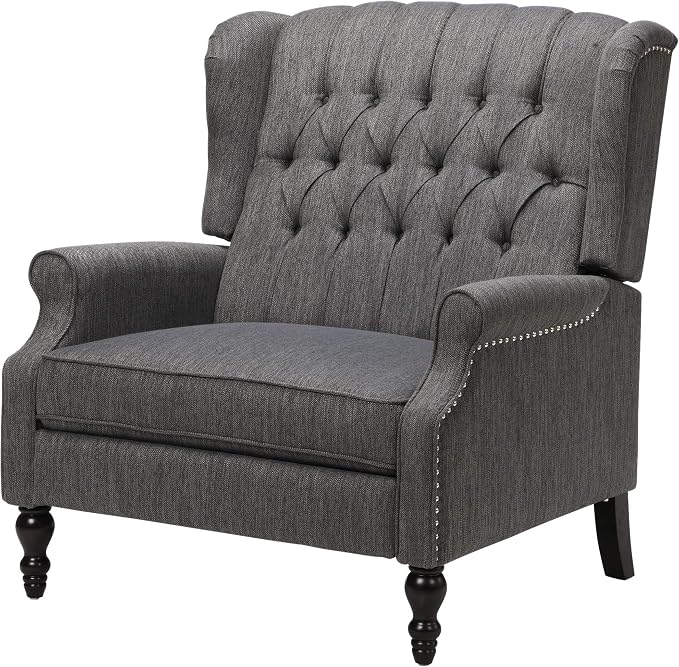
The Salome is the manual recliner for taller and bigger builds, because it is the only pick here rated to 400 pounds and it gives you a genuinely oversized seat at 37.75 inches wide. It is a push back chair, so you lean your weight against the backrest to recline, and when it opens it reaches about 63 inches deep. The tufted wingback design with nailhead trim looks like a proper piece of living room furniture rather than a hospital chair, and the birch wood frame is the sturdiest construction on this list. The honest caveat is that the owner rating sits around three and a half stars, with the mixed reviews mostly about fit and finish rather than the mechanism, so it is a pick for people who prioritize the weight capacity and the roomy seat over a flawless finish.
Manual recliners compared
The table below sums up the five picks at a glance so you can match the chair to your room and your needs.
| Model | Best for | Mechanism | Width | Weight limit |
|---|---|---|---|---|
| Kensington Hill Beaumont | Overall | Push through, 3-way | 35 in | 350 lbs |
| Lexicon Corduroy | Small spaces | Push back | 27 in | 300 lbs |
| BenchMaster Newport | Swivel + ottoman | Manual swivel | 30 in | 220 lbs |
| Coaster Greer | Glider | Manual glider | 41 in | Not listed |
| Salome Wingback | Oversized | Push back | 37.75 in | 400 lbs |
How to choose a manual recliner
The mechanism matters more than the fabric on a manual chair. Push back chairs rely on your own weight to open the footrest, so look for a chair that states its weight capacity clearly and, if you can find one, tension adjusters like the Beaumont offers, because a chair that opens too hard or too easily will annoy you every single time you sit down. Check the fully reclined depth against your room before you order, since a manual chair that measures 33 inches upright can stretch to 60 or 70 inches the moment the footrest opens. Then think about who will use it: manual recliners work best for people with normal arm and shoulder strength, and if you have arthritis, a recent surgery, or limited grip, a chair that tilts forward and lifts you to your feet is worth the extra money, so I would point you to our best power recliners guide instead. For a chair that turns instead of staying put, our best swivel recliners roundup goes deeper on bases and motion. And if you are shopping for a small room, our best wall hugger recliners list covers chairs that recline without chewing up the space behind them.
Frequently asked questions
Is a manual recliner better than a power recliner?
For many people, a manual recliner is better because it costs less, needs no outlet, has no motor to fail, and never runs out of battery mid-recline. The tradeoff is that opening the footrest takes your own effort, so a power chair is a better fit if you have weak grip, shoulder pain, or you plan to recline several times a day. If you want to compare them in detail, our best power recliner guide covers the motorized side.
How much space does a manual recliner need?
Measure the fully reclined depth, not just the upright size, before you buy. A compact chair like the Lexicon stretches to about 61 inches when open, while the Beaumont reaches 70 inches, so the footrest needs clear floor space in front and the backrest needs clearance behind, usually between 4 and 17 inches depending on the model.
Why does my manual recliner stop reclining?
The most common causes are a slipped cable, a worn release lever, or a spring that has stretched out of adjustment after years of use. The release cable that pulls the footrest open is usually the first part to fail, and it is a cheap fix. Our recliner won’t recline fix guide walks through the diagnosis step by step.
What weight limit should I look for in a manual recliner?
Check the stated capacity before you order, because the range is wide. The BenchMaster here is rated to 220 pounds, most chairs on this list sit between 300 and 350 pounds, and the Salome tops out at 400 pounds. If you are over the chair’s limit, the mechanism will strain and the frame will feel loose long before it should.
Can I sleep in a manual recliner?
Yes, for naps and even a full night if the chair reaches a flat enough angle. Push back recliners like the Beaumont open to a relaxed reclined position that supports your legs and back well enough for sleeping, though none of these chairs lays completely flat the way a dual-motor power chair can.
