
This post contains affiliate links; if you buy through one, we may earn a small commission at no extra cost to you.
Last Updated on August 23, 2026 by John Norton
If you have a narrow room or a walkway right behind your chair, the best wall hugger recliners let you kick back without leaving a gap of several feet behind the backrest. A wall hugger, sometimes called a wall saver or zero clearance recliner, slides the seat forward as it reclines, so it needs just a few inches of clearance instead of the usual twelve or more. Below are five models we would put in a small living room, with one clear recommendation if you only want a single chair.
A standard recliner tilts back on a pivot, which swings the backrest rearward and can scratch the wall or block a doorway. A wall hugger uses a glide mechanism that moves the seat forward while the back stays roughly in place, which is why it works against a wall, behind a sofa, or in a tight apartment corner.
Table of Contents
What is a wall hugger recliner and why does it matter?
A wall hugger recliner is built around a mechanism that keeps the backrest from swinging backward when the chair reclines. Instead of the back tipping toward the wall, the seat and leg rest move forward together, so the backrest stays close to its original spot. Most manufacturers list the clearance at about 3 to 6 inches, and some push-back styles need none at all because the back folds down instead.
Measure the distance from the wall to the nearest furniture or walkway before you buy, because a standard recliner at full recline can add a foot or more behind the chair. If you only have a few inches to spare, a wall hugger is the style that actually fits.
What should you look for in a wall hugger recliner?
Three things separate a good wall hugger from one that will annoy you within a month. First, check the clearance rating in inches, because some chairs marketed as wall huggers still need four to six inches and others need almost none. Second, look at the recline mechanism, since manual pull handle, push back, and power models all behave differently, and a quiet power motor is worth the extra money if you plan to nap in it. Third, consider the seat dimensions rather than the overall width, because a chair can fit an apartment yet still have a short seat depth that leaves tall people unsupported at the knees.
If you are on the shorter side, our roundup of small recliners for petite people covers models sized for smaller frames, and our power lift recliner guide covers models with lift assistance.
The 5 best wall hugger recliners compared
Every chair below is a real Amazon listing we checked during this review, with the current price noted where we could verify it. They range from a manual budget pick at around $105 to power recliners closer to $300, so there is an option for tight budgets and for buyers who want heating, USB ports, and an adjustable headrest.
1. Lexicon Polished Microfiber Wall Hugger Manual Reclining Chair – Best Overall
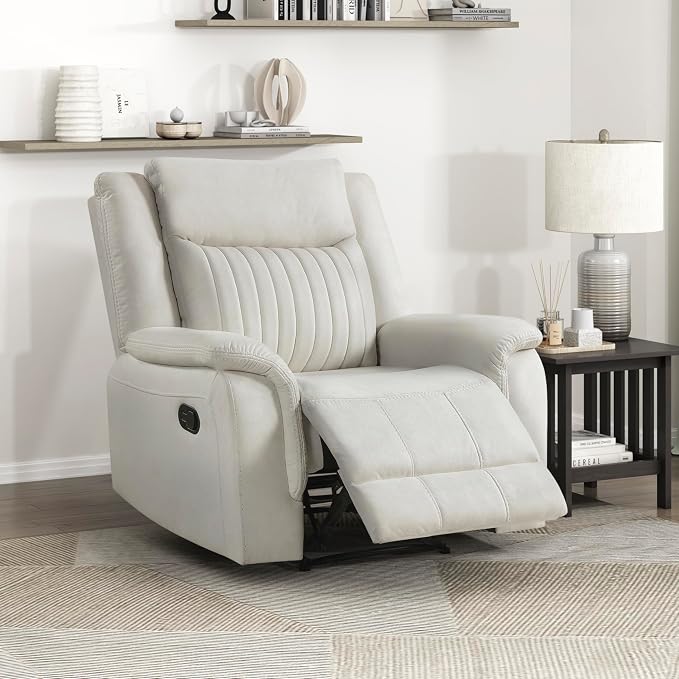
This Lexicon chair is the cleanest answer to the wall hugger question because it carries the name in the listing and the mechanism to back it up. The 39.5 inch wide frame fits standard doorways and small rooms, the polished microfiber is easy to wipe down, and the tool free assembly means you clip the backrest into place and sit down without hunting for a wrench. At around $105 it undercuts most power recliners while still giving you a genuine wall saving design, with the tradeoff that everything is manual.
See Best Price for the Lexicon Wall Hugger
2. Naomi Home Chicago Power Recliner – Best Power Wall Hugger
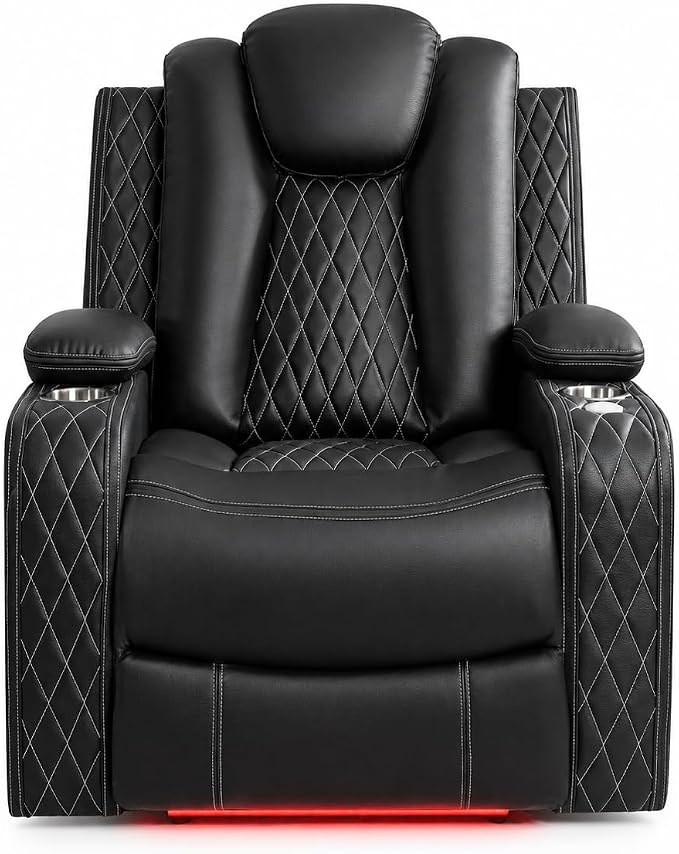
If you want the convenience of a motor, the Naomi Home Chicago power recliner is the strongest pick of the group. It adds an adjustable power headrest, LED lighting, a USB charging port, cup holders, and detachable tray tables, which turns it into a small home theater seat that happens to sit close to the wall. At around $210 it costs about twice the Lexicon, but it brings a lot more to the table for evening use.
See Best Price for the Naomi Home Chicago
3. Christopher Knight Home Alexis Push Back Recliner – Best Fabric Pick
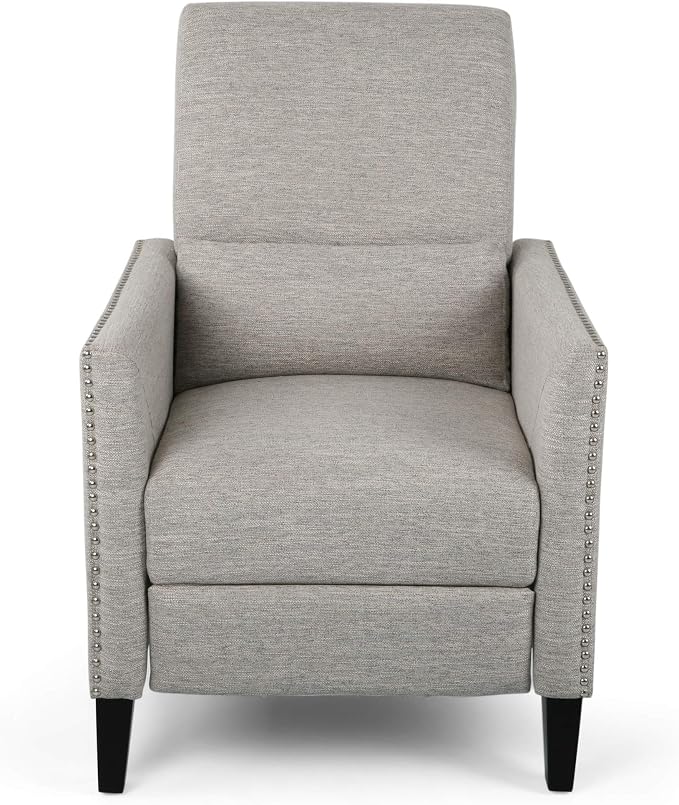
Push back recliners are the simplest wall huggers of all, because the back folds down while the seat stays put, so the chair needs almost no clearance behind it. The Christopher Knight Home Alexis is a full fabric chair with a tufted back and rolled arms that looks like a normal accent chair, and it opens into a recline position without moving toward the wall. At around $287 it is the most expensive pick here, but also the one that blends into a traditional room.
The fabric is more pleasant than bonded leather in summer, and the push back mechanism has fewer moving parts to fail than a motorized track, though you use your body weight to open and close it.
See Best Price for the Christopher Knight Alexis
4. Lexicon Corduroy Pushback Recliner – Best for Tight Budgets

The corduroy version of the Lexicon pushback is the cheapest genuine wall hugger we could verify, at around $130. It is a compact single sofa seat on a solid wood frame with a metal base, so it fits corners and narrow bedrooms, and the corduroy finish looks warmer than the microfiber model. The backrest clips in for easy assembly, but the seat cushion is firm and the recline is basic, so treat it as an occasional reading chair.
See Best Price for the Lexicon Corduroy
5. Electric Adjustable Chenille Recliner with Remote – Best Budget Power
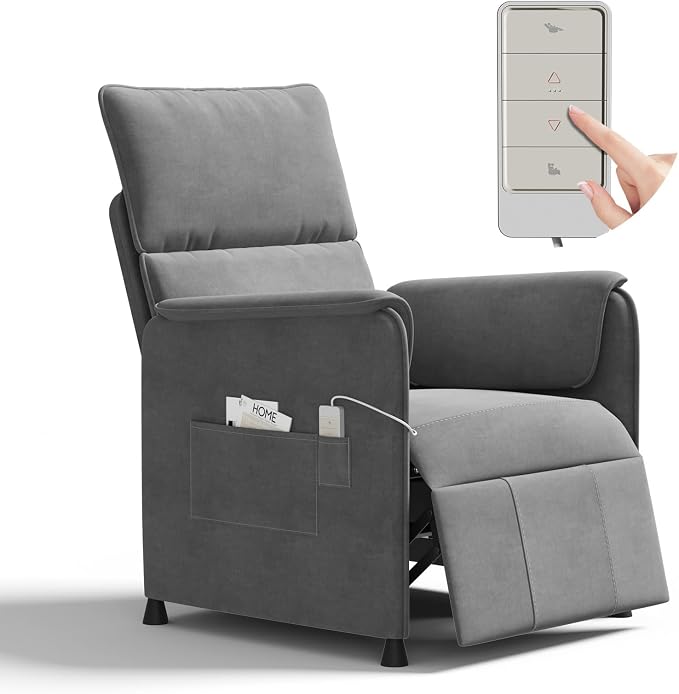
This chenille recliner is the cheapest powered option that still works as a wall hugger for a small room. It runs on a remote control with a padded backrest and a thick seat cushion, and the electric motor lifts you up instead of making you heave yourself out of the chair. At around $150 it sits between the manual budget picks and the feature-heavy Naomi Home model, minus the cup holders, LED lights, and tray tables.
See Best Price for the Chenille Recliner
Wall hugger recliners comparison table
| Model | Type | Approx. Price | Best For |
|---|---|---|---|
| Lexicon Polished Microfiber | Manual wall hugger | $105 | Best overall value |
| Naomi Home Chicago Power | Power + headrest + cup holders | $210 | Home theater features |
| Christopher Knight Alexis | Fabric push back | $287 | Traditional style rooms |
| Lexicon Corduroy Pushback | Manual push back | $130 | Tight budgets |
| Electric Chenille Recliner | Power with remote | $150 | Budget power |
Prices above are the list prices we verified on Amazon during this review, and they can move with sales and discounts. If you plan to do a lot of sleeping in the chair, the best recliner after back surgery article explains why recline angle and lumbar support matter, and the best rocker recliners guide covers the rocking versions.
Frequently asked questions
How much clearance does a wall hugger recliner need?
Most wall hugger recliners need between 3 and 6 inches of clearance behind the backrest, and push back styles need almost none because the back folds down instead of leaning backward.
Can you put a wall hugger recliner against a wall?
Yes, that is the point of the design. The seat slides forward as it reclines, so the backrest stays near the wall instead of swinging into it.
What is the difference between a wall hugger and a regular recliner?
A regular recliner tips the backrest backward on a pivot, which adds a foot or more of clearance behind the chair. A wall hugger moves the seat forward so the back stays put, which is why it fits against a wall.
Are wall hugger recliners less comfortable than regular ones?
Comfort depends on seat depth, cushion firmness, and back height rather than the mechanism, so a well made wall hugger can feel the same as a regular recliner. The main tradeoff is the leg rest, which does not lift as high on some models.
Which wall hugger recliner should you buy?
For most people the Lexicon Polished Microfiber Wall Hugger is the answer, because it gives you a genuine wall saving mechanism at around $105 and fits a small room without drama. If you want power, the Naomi Home Chicago adds a motor, a headrest, and cup holders for about $210, and the Christopher Knight Alexis is the best looking choice for a traditional living room at around $287.
