
This post contains affiliate links; if you buy through one, we may earn a small commission at no extra cost to you.
Last Updated on August 12, 2026 by John Norton
If your recliner won’t recline, the problem is almost never the frame – it’s a release cable that slipped off its clip, a jammed mechanism, or a dead motor lead on a power chair. On manual recliners the cable that links the handle to the ratchet is the most common culprit, and reattaching it takes about five minutes with the chair tipped forward. On power recliners the usual suspects are a loose hand control connection, a tripped reset, or a worn actuator. This guide works through the fixes in diagnostic order so you know exactly where to look before spending a cent on parts.
You don’t need to be handy to fix most of these problems. A screwdriver, a flashlight, and a can of white lithium grease cover nearly every case.
Table of Contents
Why won’t my recliner recline?
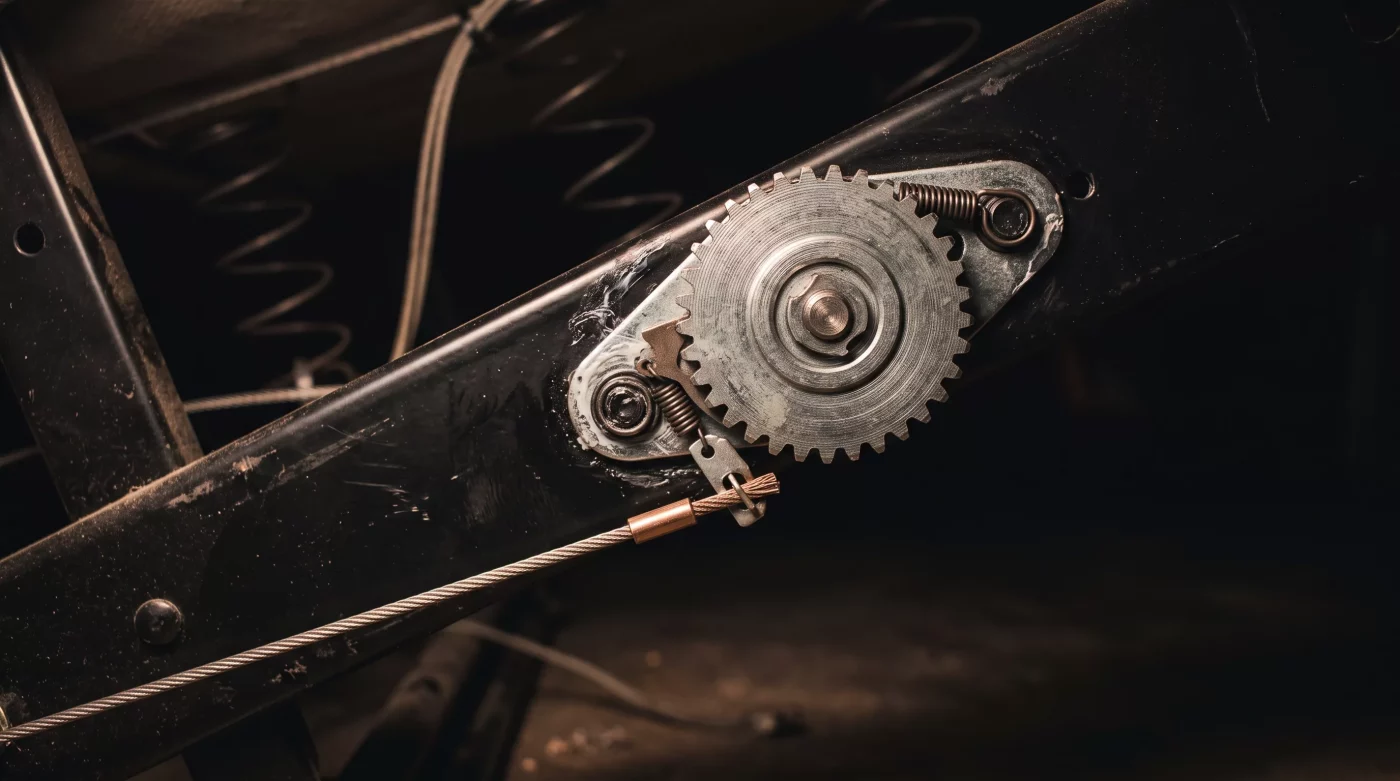
Most manual recliners stop reclining because the release cable has come unhooked from the mechanism, not because the mechanism itself broke. The handle pulls a thin steel cable that runs down the side of the chair and releases the ratchet; if that cable pops off its attachment or snaps, pulling the handle does nothing. On power recliners the back and footrest each run on their own motor, so a chair that does nothing at all usually points to power or hand control trouble.
Less common: a footrest blocked by a rug or wall, a pivot joint so dry it has seized, or a loose bolt holding the mechanism to the frame.
What tools do you need?
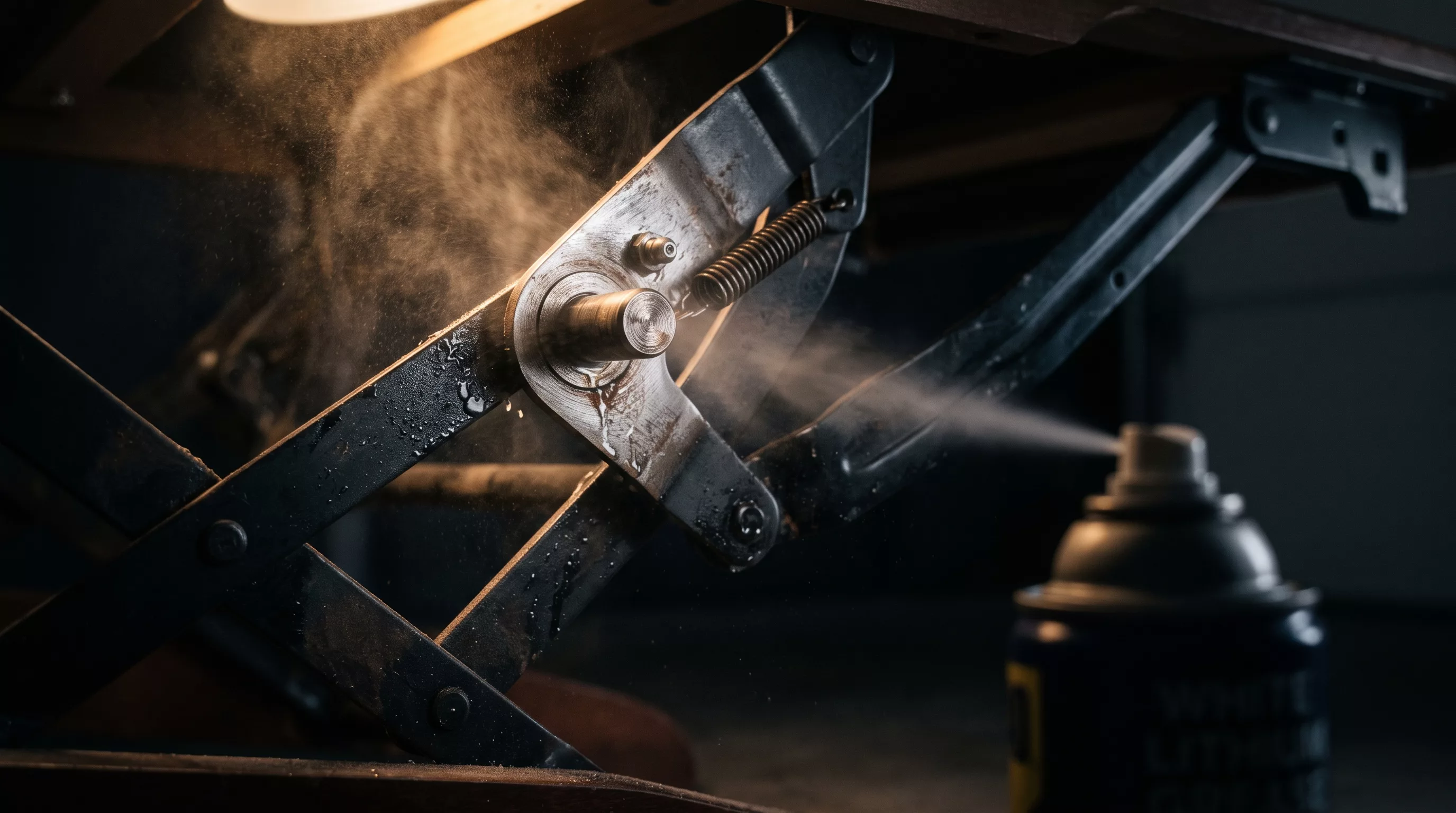
You only need a short list: a flathead and Phillips screwdriver, pliers, a flashlight, and a lubricant like white lithium grease spray for the metal pivot points. Before you start, unplug a power recliner and tip a manual one forward or on its side so you can see the mechanism underneath.
The underside layout is the same on almost every brand. The handle connects to a cable, the cable runs to the ratchet on the side of the frame, and the footrest is driven by scissor arms and springs at the front.
How to fix a manual recliner that won’t recline
Manual recliners fail in three predictable ways, and each has a simple fix. Work through them in this order.
- Check the release cable first, since it fails most often. Pull the handle and watch the cable move. If the cable end has popped out of its clip or come off the ratchet, hook it back on and test the handle again. A cable that is frayed or snapped needs replacing – a replacement recliner release cable with the D-ring handle costs a few dollars and slides straight into the existing slot.
- Lubricate the pivot points next, because dry joints are the second most common cause. Spray a little white lithium grease on every moving pivot under the chair, then work the mechanism back and forth by hand until it moves freely.
- Check for a blocked or jammed footrest at the front of the frame. Look under it for anything wedged in the scissor arms, and make sure the footrest isn’t hitting the floor, a wall, or a rug when it tries to open. If the footrest itself is the problem, our guide to fixing a recliner footrest covers the specific spring and linkage fixes.
If the cable is attached, the pivots are lubricated, and the footrest is clear but the chair still won’t recline, the ratchet may be worn or the mechanism needs a full service. That’s the deeper case in how to fix a recliner mechanism, which goes through the springs, handle, and cable in detail.
How to fix a power recliner that won’t recline
Power recliners fail differently from manual ones, and the fix starts at the wall outlet rather than under the chair. Confirm the plug is fully seated, the outlet works, and the reset button on the power supply or hand control hasn’t tripped. Unplugging the chair for five minutes clears most minor electrical glitches and is the single most useful reset.
If the chair still does nothing, check the cables between the hand control and the motor, and between the motor and the power supply. Connectors work loose over time and are easily pushed back home by hand. Then press the button again and listen for a hum. A motor that hums but doesn’t move is getting power but failing mechanically; a chair that is completely silent points to the hand control, the wiring, or the power supply.
If the back reclines but the footrest doesn’t, you’re dealing with two separate motors and only one has failed, which narrows the repair to a single actuator. That’s a fair point to call a repair tech, since replacing it involves working inside the power supply.
When should you call a professional or replace the recliner?
You should call a professional the moment a fix involves the motor, the wiring, or anything sealed on a power recliner, and any time you find a bent or cracked frame on a manual chair. A damaged frame is not safe to keep using – it can collapse under weight. Before you invest in parts, apply the fifty percent rule: if the repair cost is more than half the price of a replacement chair, buy a new one.
There’s also a tension issue to consider. A recliner that won’t hold a position usually needs a tension adjustment rather than a repair – our guide on how to adjust your recliner shows where to find the adjusters. And if your chair won’t close back up after this fix, the won’t close guide covers the opposite problem.
Frequently asked questions
Why won’t my recliner recline even though the handle moves?
If the handle moves freely but nothing happens, the release cable has almost certainly come off the ratchet on the side of the frame. Tip the chair forward, hook the cable end back onto its clip, and the handle should re-engage the mechanism.
Why won’t my power recliner recline?
A power recliner that won’t recline is usually a power or connection problem: a loose plug, a tripped reset, or a hand control cable that worked loose. Unplug the chair for five minutes, reseat every connector, and test again before assuming the motor is bad.
Why does my recliner recline partway and then stop?
A recliner that goes partway and then stops on a power chair points to a failing actuator, since the motor can’t complete its travel. On a manual chair the same symptom usually means a dry or seized pivot joint.
Is it worth fixing an old recliner?
Apply the fifty percent rule: if the repair costs more than half the price of a comparable new chair, replacement usually wins. For a simple cable or lubrication fix, repairing is almost always worth it.
Can I use WD-40 on my recliner?
Yes, but use a white lithium grease rather than a general-purpose spray for the metal pivots, since lithium grease stays put instead of evaporating. A quick spritz after the cable fix prevents the problem returning.
